
Have you ever wondered what wild animals eat when they are living far away from people?
A lion does not have a person bringing it food every morning. An elephant has to find its own plants, and a wolf may have to travel a long distance before finding suitable prey. In the wild, finding food is part of everyday life, and the type of food an animal eats is closely connected to the way it lives.
Wild animals have very different diets. Some mainly eat grass, leaves, fruits, and other plants. Some hunt and eat other animals, while others eat a mixture of both plant and animal foods.
So, what do wild animals eat? The simple answer is that it depends on the species, its habitat, its size, and what food is naturally available around it.
Let’s take a closer look at the diets of wild animals and how they find the food they need to survive.
What Do Wild Animals Eat?
Wild animals can eat many different types of food. Their diets may include grass, leaves, fruits, seeds, flowers, insects, fish, eggs, small mammals, birds, and other animals.
There is no single diet that applies to every wild animal.
For example, an elephant may spend much of its day eating vegetation, while a tiger depends mainly on meat. A bear can eat both plant and animal foods, depending on the species and the food available in its habitat.
Scientists often group animals into three broad categories based on their diets:
- Herbivores – animals that mainly eat plants
- Carnivores – animals that mainly eat other animals
- Omnivores – animals that eat both plants and animals
These categories make it easier to understand animal diets, although nature can be more complicated than these three labels suggest.
Herbivores: Animals That Eat Plants
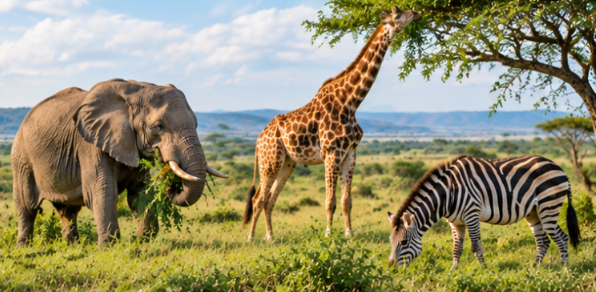
Herbivores get most of their food from plants. Depending on the species, they may eat grass, leaves, fruits, flowers, roots, seeds, bark, or other vegetation.
Many herbivores have body features that help them find and process plant food. For example, some have broad teeth for grinding vegetation, while others have long necks or specialized mouths that help them reach particular plants.
Elephants
Elephants are herbivores and eat a wide range of plant material.
Their diet can include grass, leaves, branches, bark, roots, and fruit. Because elephants are so large, they need to consume a substantial amount of vegetation to support their bodies.
An elephant’s trunk is an important feeding tool. It can pick up grass, pull leaves from branches, and handle food with surprising precision.
Giraffes
Giraffes mainly eat leaves, shoots, and other vegetation from trees and shrubs.
Their height gives them access to leaves that many other plant-eating animals cannot easily reach. Their long tongues also help them pull leaves from branches.
Zebras
Zebras are primarily grazers. Grass makes up most of their diet.
They can spend a significant part of the day feeding, particularly when fresh grass is available. Their grazing habits also make them an important part of grassland ecosystems.
Carnivores: Animals That Eat Other Animals
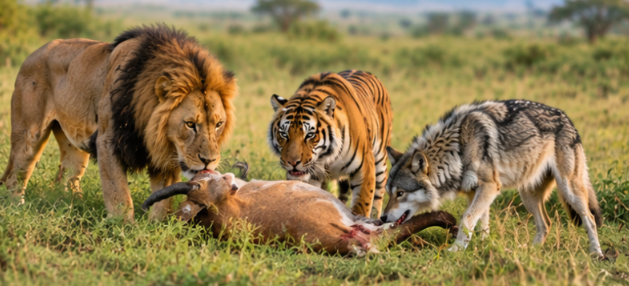
Carnivores mainly obtain their food by eating other animals. Some actively hunt their prey, while others may also feed on animals that have already died.
Carnivorous animals have different hunting strategies. Some depend on speed, some use stealth, and others work together in groups.
Lions
Lions are carnivorous predators that commonly hunt animals such as zebras, wildebeest, and antelope.
Tigers
Tigers are also carnivores. They commonly hunt animals such as deer and wild pigs, although their diet can include smaller mammals and other prey as well.
Unlike lions, tigers generally hunt alone. They often rely on patience, camouflage, and a powerful short-range attack rather than chasing prey over very long distances.
Wolves
Wolves are adaptable predators. Depending on where they live, they may eat deer, elk, wild boar, smaller mammals, and other available prey.
Wolves are known for their social behavior and may hunt cooperatively in packs. Working together can make it possible to pursue prey that would be difficult for one wolf to handle alone.
Omnivores: Animals That Eat Both Plants and Animals
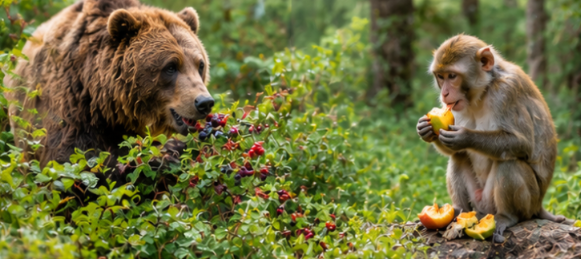
Omnivores have a more flexible diet because they can eat both plant and animal foods.
This flexibility can be useful when certain foods become difficult to find. An omnivorous animal may change what it eats according to the season, location, and availability of food.
Bears
Many bear species have varied diets. Depending on the species and habitat, bears may eat fruits, berries, roots, insects, fish, small animals, and other available foods.
A bear’s diet is not exactly the same everywhere. The foods available in its environment have a major influence on what it eats.
Monkeys
Monkey diets vary from one species to another.
Many monkeys eat fruits, leaves, seeds, flowers, and insects. Some species may also eat eggs or small animals.
Their ability to use different food sources helps many monkey species survive in changing forest environments.
What Do Different Wild Animals Eat?
Different species have different nutritional needs and feeding behaviors. Here are some common examples:
| Wild Animal | Common Foods |
|---|---|
| Lion | Antelope, zebra, wildebeest and other prey |
| Tiger | Deer, wild pigs, smaller mammals and other prey |
| Elephant | Grass, leaves, bark, roots and fruit |
| Giraffe | Leaves, shoots and other vegetation |
| Zebra | Mainly grass |
| Wolf | Deer, elk, wild boar and smaller mammals |
| Bear | Fruits, berries, insects, fish and other foods |
| Monkey | Fruits, leaves, seeds, flowers and insects |
| Eagle | Fish, birds, mammals and reptiles, depending on species |
| Crocodile | Fish, birds, mammals and other animals |
These are general examples rather than fixed menus. The diet of a particular animal can change with its species, habitat, season, age, and food availability.
How Do Wild Animals Find Food?
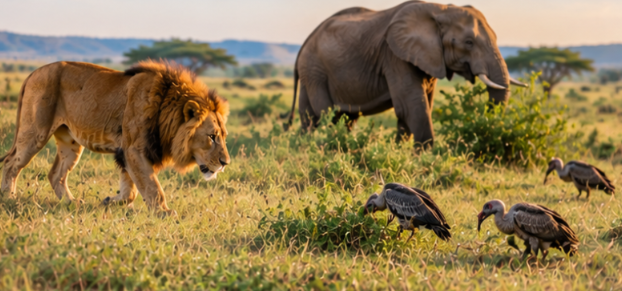
Finding food in the wild can take a lot of time and energy.
Predators may rely on sight, hearing, or smell to locate prey. Some animals use camouflage to get close without being noticed. Others wait patiently for the right opportunity.
Herbivores face a different challenge. They may need to travel across large areas to find enough vegetation, especially during dry seasons or periods when food is scarce.
Some animals also remember productive feeding areas. Others follow seasonal changes, such as the growth of fresh plants or the movement of prey.
These feeding behaviors are not random. Over many generations, animals have developed physical abilities and behaviors that help them make better use of the resources available in their habitats.
How Does Habitat Affect What Animals Eat?
An animal’s habitat plays a major role in its diet.
A giraffe living in an African savanna has access to different foods than a polar bear living in the Arctic. A fish living in a river also has completely different feeding opportunities from a monkey living in a rainforest.
This is why animals are often adapted to the environments where they live.
Weather and seasons can also change the food available in an area. Fruits may be plentiful during one part of the year and scarce during another. Grass may become difficult to find during droughts.
When food availability changes, some animals adapt by changing their diet, traveling farther, or moving to another area.
Do Wild Animals Drink Water?
Most wild animals need water, although the way they get it can differ.
Many animals drink directly from rivers, lakes, ponds, streams, or other natural water sources. Some also obtain part of their water from the foods they eat.
Animals living in dry environments may have special adaptations that help them cope with limited water. Some can survive for long periods without drinking directly, while others travel considerable distances to reach water.
Water is especially important for animals because it supports essential body functions and helps them survive in their environment.
How Much Food Do Wild Animals Need?
There is no standard amount of food that all wild animals need.
Food requirements depend on an animal’s body size, species, age, activity level, metabolism, and the energy provided by its food.
A large herbivore such as an elephant needs a great deal of vegetation to support its body. A much smaller predator may need considerably less food.
Food intake can also change from one day to another. When food is abundant, an animal may have plenty to eat. During difficult periods, it may need to spend much more time searching for food.
Why Is Diet Important for Wild Animals?
Food provides animals with energy and nutrients that support their daily lives.
A suitable diet helps animals:
- Grow and develop
- Maintain their body and muscles
- Move and search for food
- Reproduce
- Raise their young
- Maintain normal body functions
- Survive changes in their environment
A lack of suitable food can make animals weaker and can affect their ability to reproduce or care for their young.
For this reason, protecting the natural food sources and habitats of wildlife is an important part of conservation.
What Happens When Wild Animals Cannot Find Enough Food?
Food shortages can happen for many reasons. Drought, habitat destruction, extreme weather, changes in vegetation, and declines in prey populations can all affect the amount of food available to wildlife.
When food becomes scarce, animals may travel farther in search of it. Some may compete more strongly with other animals, while species with flexible diets may switch to alternative foods.
In serious situations, a lack of food can affect an entire wildlife population.
This is one reason healthy ecosystems matter. Protecting forests, grasslands, wetlands, rivers, and other natural habitats helps preserve the food sources that wild animals depend on.
Do Wild Animals Eat the Same Food All Year?
Not always.
Many animals change their diets throughout the year because the availability of food changes with the seasons.
For example, an animal may eat more fruit when it is in season and rely on other food sources when fruit becomes scarce. Predators may also change their prey depending on which animals are available in their habitat.
This ability to adjust feeding behavior can help animals survive seasonal changes.
Frequently Asked Questions
What do wild animals eat?
Wild animals eat different foods depending on their species and habitat. Their diets may include plants, fruits, seeds, insects, fish, eggs, or other animals.
Do all wild animals eat meat?
No. Many wild animals are herbivores and mainly eat plants. Others are omnivores and eat both plant and animal foods.
What do herbivores eat?
Herbivores mainly eat plants. Their diets may include grass, leaves, fruits, flowers, roots, seeds, and bark.
What do carnivores eat?
Carnivores mainly eat other animals. Their prey can range from insects and fish to birds, reptiles, and mammals, depending on the species.
What do omnivores eat?
Omnivores eat both plant and animal foods. Their exact diet depends on the animal species and the resources available in its habitat.
Do wild animals drink water?
Yes, most wild animals need water. They may drink from natural water sources or obtain some moisture from the foods they eat.
Why do different animals eat different foods?
Animals have different body structures, digestive systems, behaviors, and habitats. These differences influence which foods they can find, digest, and use for energy.
Final Thoughts
Wild animal diets are incredibly diverse. An elephant may spend much of its day feeding on vegetation, while a tiger searches for prey, and a bear may switch between plant and animal foods depending on what is available.
What an animal eats is not simply a matter of preference. Its diet is connected to its body, behavior, habitat, and survival.
By understanding the feeding habits of wild animals, we can also learn more about how ecosystems work and why healthy natural habitats are so important for wildlife.
From grazing grasslands to hunting forests, every species has its own place in the natural world—and food is one of the most important parts of that story.