
Weird animal facts can reveal some of the most surprising and fascinating things about the animal kingdom. From creatures with unusual body features to animals with incredible survival skills, strange behaviors, and remarkable abilities, the world of animals is full of discoveries that can surprise us.
Some of these characteristics may sound unbelievable, but they are real adaptations that help animals survive in their environments. Learning Weird Animal Facts can also give us a better understanding of how different species live, communicate, find food, protect themselves, and reproduce.
In this article, we will explore some of the strangest and most interesting facts about animals from around the world. You will learn about unusual animal behaviors, incredible physical abilities, surprising diets, unique habitats, and other facts that show just how diverse the animal kingdom really is.
1. Octopuses Have Three Hearts
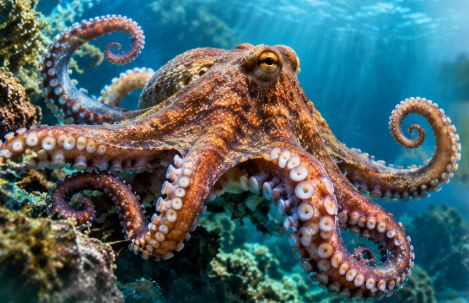
An octopus has three hearts, which is one of the most unusual features in the animal kingdom. Two of its hearts pump blood toward the gills, where the blood receives oxygen. The third heart pumps oxygen-rich blood to the rest of the body.
There is another interesting detail: when an octopus swims, the heart that supplies the body stops beating. This is one reason octopuses often prefer crawling along the ocean floor rather than swimming for long periods.
2. Cows Have Best Friends
Cows are social animals and can form strong relationships with other members of their herd. Research has shown that cows can become attached to particular companions and may experience more stress when separated from them.
This is a reminder that animal behavior can be much more complex than people sometimes assume.
3. Axolotls Can Regrow Body Parts
Axolotls are aquatic salamanders famous for their remarkable ability to regenerate parts of their bodies. They can regrow limbs and can also regenerate certain tissues and organs.
Their unusual regenerative abilities have made axolotls important animals for scientific research. Unlike many adult amphibians, axolotls also retain their juvenile-looking features throughout their lives.
4. Sloths Can Hold Their Breath for a Surprisingly Long Time
Sloths are famous for moving slowly, but their bodies have several fascinating adaptations. They can slow their metabolism and heart rate, which helps them conserve energy.
Sloths are also capable swimmers. They can hold their breath for extended periods, partly because they can significantly slow their heart rate while underwater.
5. Flamingos Are Naturally Grayish-White
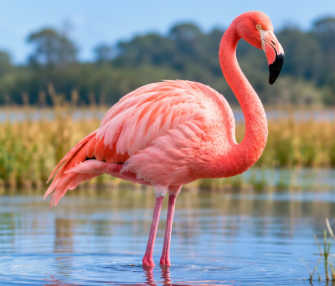
Flamingos are famous for their bright pink feathers, but they are not born with that color. Young flamingos have pale, grayish or whitish feathers.
Their pink coloration develops from pigments called carotenoids that they obtain through their diet. These pigments are found in foods such as algae and small aquatic organisms.
6. Goats Have Rectangular Pupils
Goats have unusual horizontal, rectangular-shaped pupils. This eye structure gives them a wide field of vision and helps them detect predators while they are feeding.
Their unusual eyes are especially useful because goats are prey animals. Being able to see a wide area around themselves can help them notice danger quickly.
7. Crows Can Recognize Human Faces
Crows are highly intelligent birds with impressive memory and problem-solving abilities. Studies have shown that some crows can recognize individual human faces and remember people they associate with danger.
This intelligence helps explain why crows can adapt successfully to cities and other environments where they regularly interact with humans.
8. Dolphins Have Names for One Another
Dolphins communicate using a wide range of sounds, including whistles and clicks. One particularly interesting behavior is the use of individual signature whistles.
A dolphin develops a distinctive whistle that can function somewhat like an individual identifying signal. Other dolphins can learn and recognize these sounds, allowing them to identify particular members of their social group.
9. Axolotls Can Regrow Their Limbs
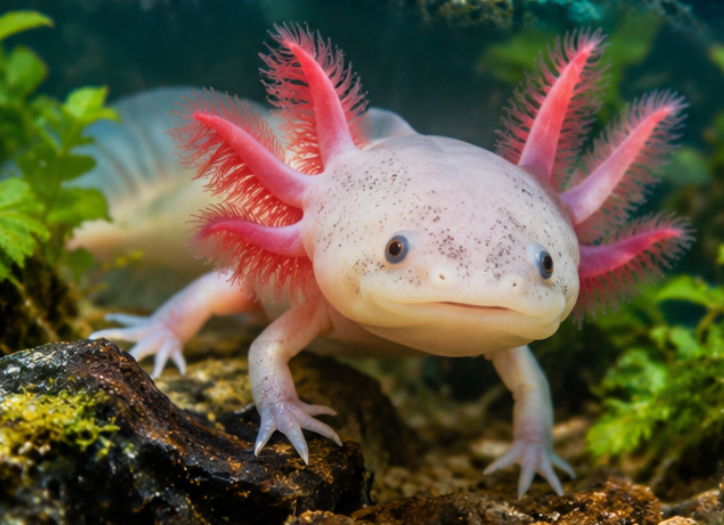
One of the most remarkable abilities of axolotls is their capacity to regenerate lost limbs. They can also repair and regenerate other tissues, making them an important subject of biological research.
Their regenerative abilities are unusual among adult vertebrates and continue to attract scientific interest.
10. Platypuses Lay Eggs
The platypus is one of the strangest mammals in the world. Although it is a mammal, it lays eggs instead of giving birth to live young.
Platypuses also have a broad bill, webbed feet, and a body adapted for life in the water. Males have venomous spurs on their hind legs, making the species even more unusual.
11. Male Seahorses Carry the Babies
Seahorses have one of the most unusual reproductive systems in the animal world. The female transfers her eggs to a special brood pouch on the male’s body.
The male then carries the developing embryos until they are ready to be released. When the babies are born, the male releases tiny young seahorses into the water.
12. A Group of Flamingos Is Called a Flamboyance
Flamingos often gather in large groups. A group of flamingos is commonly known as a flamboyance, a fitting name for birds famous for their striking pink color and unusual appearance.
Large groups can help flamingos find food and may also provide some protection from predators.
13. Elephants Can Communicate Using Very Low Sounds
Elephants communicate using a variety of sounds, including low-frequency calls known as infrasound. Some of these sounds are below the range of human hearing.
These low-frequency sounds can travel long distances, allowing elephants to communicate with other members of their social groups even when they are far apart.
14. Koalas Have Fingerprints Similar to Humans
Koalas have fingerprints with patterns that can look surprisingly similar to human fingerprints. Their fingerprints developed independently from those of humans and other primates.
Because of their similarity, koala fingerprints can be difficult to distinguish from human fingerprints in some circumstances without careful examination.
15. Cuttlefish Can Change Their Appearance
Cuttlefish are masters of camouflage. They can rapidly change the color and pattern of their skin to blend into their surroundings or communicate with other animals.
They can also alter the texture of their skin, helping them look more like rocks, sand, or other objects in their environment.
16. Some Frogs Can Freeze and Survive
The wood frog has an extraordinary survival adaptation. During extremely cold conditions, much of its body can freeze.
The frog protects its cells by producing substances that help reduce damage caused by freezing. When temperatures rise again, the frog can thaw and resume normal activity.
17. Octopuses Can Change Color for More Than Camouflage
Octopuses do not change color only to hide. Their color patterns can also be used for communication, warning, and interactions with other animals.
Specialized cells in their skin allow them to create complex and rapidly changing patterns, making their visual communication remarkably sophisticated.
18. Some Turtles Can Breathe Through Their Rear End
Certain aquatic turtles have the ability to absorb oxygen through specialized tissues around the cloaca. This unusual adaptation can help them remain underwater for long periods, especially during cold conditions when their metabolism is slow.
This does not mean turtles breathe exactly like humans through their lungs; instead, the process allows them to absorb some oxygen directly from the surrounding water.
19. Bats Are the Only Mammals Capable of True Sustained Flight
Several animals can glide through the air, but bats are the only mammals capable of true powered and sustained flight.
Their wings are formed from thin membranes of skin stretched over elongated finger bones. Different bat species have developed different flying styles depending on their habitats and diets.
20. Some Snakes Can Sense Heat
Several snake species, including pit vipers, have specialized heat-sensing organs that help them detect infrared radiation from warm objects.
This ability can help snakes locate warm-blooded prey, even when visibility is poor. It is especially useful for species that hunt at night.
21. Giraffes Have Extremely Long Necks but the Same Number of Neck Vertebrae as Humans
A giraffe’s neck can be extremely long, but like humans and most other mammals, giraffes normally have seven cervical vertebrae.
The major difference is the size and length of these individual vertebrae. Each neck vertebra can be very large, allowing the giraffe to reach leaves high above the ground.
22. Hummingbirds Can Fly Backward
Hummingbirds have an unusual flying ability that most birds do not possess. They can fly backward as well as forward.
Their wings move in a special pattern that allows them to hover and control their movement with remarkable precision. This is particularly useful when feeding from flowers.
23. Penguins Can Drink Salt Water
Penguins often live in environments where freshwater is limited, yet they can consume seawater. They have specialized glands that help remove excess salt from their bodies.
The concentrated salt solution is then expelled through passages near their bills, allowing penguins to maintain their internal salt balance.
24. A Narwhal’s Tusk Is Actually a Tooth
The long spiral tusk of a narwhal is actually an elongated tooth. It usually grows from the upper jaw and can become several feet long.
The tusk contains millions of nerve endings and is considered a highly sensitive structure. Scientists believe narwhals may use their tusks for several purposes, including sensing their environment and social interactions.
25. Wombats Produce Cube-Shaped Poop
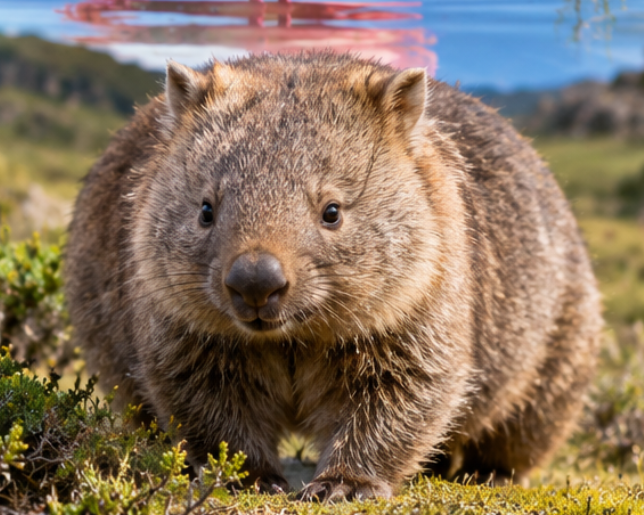
Wombats are famous for producing cube-shaped droppings. Their unusual digestive system and the varying elasticity of different parts of their intestines help form the distinctive shape.
The cube-shaped droppings are useful because they do not roll away easily. Wombats use them to mark territory and communicate with other wombats.
26. Bees Can Recognize Patterns
Honeybees have surprisingly sophisticated visual abilities. They can learn to recognize patterns and use visual information to help navigate between their hive and food sources.
Bees also use the famous waggle dance to communicate information about the location of food to other members of their colony.
27. Pistol Shrimp Can Create Extremely Powerful Snapping Bubbles
Pistol shrimp have one oversized claw that can snap shut extremely quickly. The movement creates a powerful pressure wave and a collapsing bubble in the surrounding water.
The resulting effect can stun or kill small prey and can also help the shrimp defend itself from predators.
28. Ravens Can Solve Problems
Ravens belong to the same bird family as crows and are known for advanced problem-solving skills. They can learn from experience, use objects in useful ways, and adapt their behavior to new situations.
Their intelligence is one of the reasons corvid birds are frequently studied by scientists interested in animal cognition.
29. Starfish Do Not Have a Brain Like Humans
Starfish, also called sea stars, do not have a centralized brain like humans. Instead, they have a nervous system arranged around their body, including a nerve ring and radial nerves extending into their arms.
This nervous system allows them to coordinate movement and respond to their environment despite lacking a conventional brain.
30. Some Animals Eat Their Own Species
Cannibalism occurs in several animal species. Depending on the species and circumstances, animals may eat members of their own species because of competition, limited food availability, reproductive behavior, or other survival pressures.
Although it may seem strange to humans, cannibalism is a natural behavior that has evolved in different forms across the animal kingdom.
Why Are Animals So Strange?
Many of these weird animal facts are actually the result of adaptations. An unusual body part, behavior, or ability can help an animal find food, escape predators, attract a mate, communicate, or survive difficult environmental conditions.
For example, the rectangular pupils of goats provide a broad field of vision, while the heat-sensing organs of some snakes help them locate prey. The ability of an octopus to change color provides camouflage and communication, while a hummingbird’s unique wing movement allows it to hover and even fly backward.
These adaptations show that there is no single way to survive in nature. Every species has evolved according to the challenges of its environment.
What Can We Learn From strange facts about animals?
Learning weird animal facts is not only entertaining. It can also help us understand biodiversity and the complex relationships between animals and their environments.
When we learn how an animal eats, communicates, reproduces, protects itself, or survives extreme conditions, we gain a better understanding of why protecting wildlife and natural habitats is important.
The animal kingdom contains millions of species, and scientists are still discovering new behaviors and biological adaptations. That means there are likely many more strange and fascinating animal facts waiting to be discovered.
Frequently Asked Questions
What is the weirdest animal fact?
There is no single answer because the animal kingdom contains many unusual adaptations. Examples include wombats producing cube-shaped droppings, male seahorses carrying developing babies, and octopuses having three hearts.
What animal has the strangest body?
Animals such as the platypus, axolotl, narwhal, and octopus have particularly unusual physical characteristics. The platypus is especially distinctive because it combines several features rarely seen together in mammals.
Which animal has three hearts?
The octopus has three hearts. Two hearts send blood to the gills, while the third pumps oxygen-rich blood to the rest of the body.
Which animal can regenerate lost body parts?
Axolotls are well known for their remarkable regenerative abilities. They can regenerate limbs and several types of tissues, making them an important species for scientific research.
Which animal gives birth through the male?
Seahorses are famous for their unusual reproductive system. The female places her eggs into a special pouch on the male, where the developing young remain until they are released.
Can animals really recognize humans?
Yes. Some animals can recognize individual humans. Crows, for example, have demonstrated the ability to remember and distinguish human faces.
Why do flamingos turn pink?
Flamingos obtain carotenoid pigments from their food. These pigments contribute to the pink and reddish coloration of their feathers.
Can any animals survive being frozen?
Some animals have adaptations that allow them to survive freezing temperatures. The wood frog is a well-known example because it can survive the freezing of much of its body during winter.
Final Thoughts
The animal kingdom is filled with incredible adaptations that can seem almost impossible at first. From three-hearted octopuses and cube-pooping wombats to male seahorses carrying young and hummingbirds flying backward, these strange facts about animals reveal just how diverse life on Earth can be.
Every species has its own way of finding food, avoiding danger, communicating, reproducing, and surviving. The more we learn about animals, the more we discover that nature is full of unexpected solutions to the challenges of life.
If you enjoy learning about animals, exploring more weird animal facts can help us understand animals better.. There are thousands of species around the world, each with unique behaviors, habitats, diets, and adaptations waiting to be discovered.