
Sea birds are among the most remarkable birds on Earth. They spend much of their lives around oceans, coastlines, islands, and other marine environments, where they must cope with strong winds, saltwater, changing temperatures, and sometimes long periods far from land.
Unlike birds that simply visit the coast occasionally, many seabirds have physical and behavioral adaptations that help them survive in marine environments. Some glide over the waves for hours with barely a wingbeat, while others dive underwater to catch fish and squid. Penguins have taken this adaptation even further: although they cannot fly through the air, their streamlined bodies and powerful wings allow them to “fly” through water.
There is no single characteristic that defines every seabird. Different groups have evolved different ways of living around the ocean. Albatrosses, puffins, penguins, gulls, terns, pelicans, cormorants, gannets, shearwaters, and petrels are all examples of birds strongly associated with marine environments.
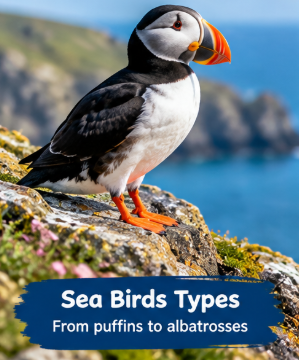
What Are Sea Birds?
Sea birds, commonly written as seabirds, are birds that are adapted to life in marine environments. Many spend a large portion of their lives on the ocean and return to land mainly to breed, nest, or raise their young.
The exact boundaries of the term can vary. Some birds regularly use both marine and freshwater habitats, while others may spend considerable time along beaches, estuaries, or coastal wetlands. What they have in common is a strong ecological connection with marine environments.
Some seabirds travel enormous distances between breeding colonies and feeding areas. Others remain relatively close to coastal waters. Their lifestyles therefore range from coastal hunting to spending months traveling across open oceans.
Examples of Sea Birds
Sea birds are not one single family of birds. They include several unrelated groups that have independently developed adaptations for marine life.
Albatrosses
Albatrosses are famous for their enormous wings and ability to travel long distances over open ocean. Their long, narrow wings are well suited to gliding on wind currents.
Instead of continuously flapping, an albatross can use rising air over waves to conserve energy while traveling across the sea.
Penguins
Penguins are seabirds with an unusual adaptation: they are flightless in the air but highly capable swimmers.
Their wings have evolved into flipper-like structures, and their streamlined bodies help them move efficiently underwater. Different penguin species live in environments ranging from relatively mild coastal regions to the cold waters around Antarctica.
Puffins
Puffins are small seabirds recognized for their colorful bills during the breeding season. They spend much of their lives at sea and return to land to breed.
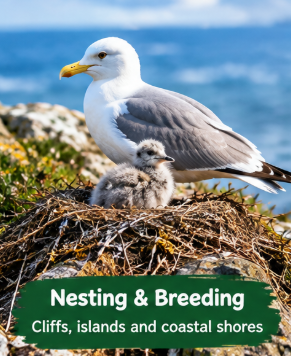
Atlantic Puffins, for example, are capable divers and can catch small fish underwater.
Gulls
Gulls are among the most familiar birds associated with coastlines. They can often be seen around beaches, harbors, fishing areas, estuaries, and offshore islands.
Not every gull spends most of its life at sea, so simply seeing a bird near a beach does not automatically make it a seabird in the strictest ecological sense.
Terns
Terns are lightweight, agile birds that are particularly well known for hunting fish. Many species plunge into the water from the air to capture prey.
Some terns are also exceptional migrants and may travel between distant breeding and non-breeding areas.
Pelicans
Pelicans are large water-associated birds with long bills and expandable throat pouches. Several pelican species depend heavily on coastal and marine environments and use their specialized bills to capture fish.
Cormorants
Cormorants are strong diving birds. They pursue fish underwater using their feet for propulsion and can be found along marine coasts as well as freshwater habitats.
Gannets, Petrels and Shearwaters
Gannets, petrels, and shearwaters are important groups of marine birds. Many are highly adapted to life over open water, where they search for fish, squid, and other marine prey.
Shearwaters and petrels may travel vast distances during their annual movements, making them particularly interesting examples of ocean-going birds.
How Are Sea Birds Adapted to Ocean Life?
Living at sea presents challenges that land birds do not normally face. Sea birds have developed a variety of adaptations to deal with those challenges.
Waterproof Feathers
Many seabirds have feathers that help keep water from penetrating deeply into their plumage. Keeping feathers in good condition is important because soaked plumage can increase heat loss and make swimming or flying more difficult.
Birds maintain their feathers through regular preening, which helps keep the plumage properly arranged and functional.
Salt Removal
Seawater contains far more salt than most birds can safely tolerate. Some seabirds have specialized salt glands that help remove excess salt from their bodies.
This adaptation allows certain marine birds to obtain water from seawater or consume salty marine prey without accumulating dangerous levels of salt.
Efficient Flight
Many ocean-going birds have wings and body shapes suited to long-distance travel.
Albatrosses are an outstanding example. Their large wings allow them to exploit wind conditions over the ocean and travel long distances while reducing the energy required for continuous flapping.
Diving Adaptations
Some sea birds obtain their food by diving beneath the surface.
Puffins, cormorants, penguins, and several other marine birds use different combinations of body shape, wings, feet, and swimming techniques to pursue prey underwater.
Insulation
Cold ocean environments can cause rapid heat loss. Seabirds living in colder regions may have dense feathers, layers of body insulation, or other adaptations that help them maintain a stable body temperature.
Penguins, for example, have specialized plumage and body adaptations that help them survive cold marine environments.
Where Do Sea Birds Live?
Sea birds can be found in almost every major ocean and across many coastal environments.
Their habitats include:
- Open ocean
- Rocky coastlines
- Sandy and rocky islands
- Sea cliffs
- Estuaries
- Coastal wetlands
- Offshore waters
- Polar seas
- Temperate coastlines
- Tropical islands
Many species spend most of their feeding time offshore but return to land to reproduce. Remote islands and coastal cliffs can therefore become extremely important breeding sites.
Some seabirds are remarkably independent of land outside the breeding season. They may spend long periods traveling over open water before returning to colonies.
What Do Sea Birds Eat?
The diet of sea birds varies considerably between species.
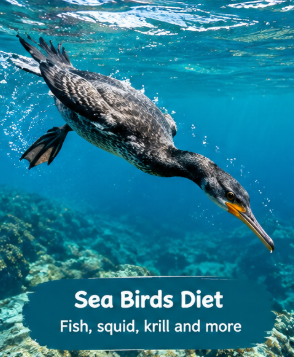
Common foods include:
- Small fish
- Squid
- Krill
- Crustaceans
- Marine invertebrates
- Jellyfish
- Small marine animals
- Carrion or discarded food in some species
Their hunting methods are equally diverse.
Terns may plunge into the water from above. Penguins pursue prey underwater. Cormorants dive after fish, while some petrels and albatrosses search large areas of ocean for suitable food.
Food availability can strongly influence where seabirds travel. When fish or other prey become scarce, birds may need to travel farther or adjust their feeding behavior.
How Do Sea Birds Nest and Raise Their Young?
Although many sea birds spend large amounts of time at sea, breeding usually brings them back to land.
Breeding locations can include cliffs, beaches, rocky islands, burrows, and other protected coastal sites.
Some species gather in enormous colonies. Others nest more separately.
Colonial breeding can provide advantages such as increased opportunities to find mates and collective protection against certain predators, but dense colonies can also make birds vulnerable when disease, invasive predators, human disturbance, or habitat changes affect the breeding site.
Parents generally take turns or share responsibilities for protecting and feeding their offspring, although the exact behavior varies by species.
Do Sea Birds Migrate?
Many sea birds migrate, sometimes traveling enormous distances between breeding and feeding areas.
Migration allows birds to take advantage of seasonal food supplies and favorable breeding conditions. Some species travel between hemispheres, while others make shorter movements along coastlines or between nearby marine areas.
The Arctic Tern is one of the most famous examples of long-distance migration. BirdLife International describes its annual journey as reaching roughly 80,000 kilometers in some estimates.
Because migratory seabirds cross national borders and spend time in international waters, protecting them often requires cooperation between multiple countries and conservation organizations.
Why Are Sea Birds Important?
Sea birds are more than attractive animals to observe. They are important parts of marine and coastal ecosystems.
They consume marine organisms, transfer nutrients between ocean and land, and can connect different parts of an ecosystem through their movements.
When seabirds return to breeding islands, their droppings can transport nutrients from marine feeding areas onto land. These nutrients can influence coastal and island ecosystems.
Seabirds can also provide useful information about the health of marine ecosystems. Changes in their breeding success, food availability, movement patterns, or population size can reveal changes occurring in the wider marine environment.
What Threats Do Sea Birds Face?
Despite their ability to survive challenging ocean conditions, many seabirds face serious human-caused pressures.
Fishing Bycatch
One of the major threats is bycatch, which occurs when birds are accidentally caught in fishing gear.
Longline fishing and other fishing methods can unintentionally kill seabirds that approach bait or fishing operations.
BirdLife International identifies fisheries bycatch as a major threat to seabirds and reports that practical changes to fishing practices can substantially reduce these accidental deaths.
Overfishing
When fishing reduces the abundance of the small fish and other marine organisms that seabirds depend on, birds can struggle to find enough food.
This is particularly important during the breeding season, when adult birds must find enough food for their chicks.
Plastic and Other Pollution
Plastic pollution can harm marine birds through ingestion or entanglement. Oil and chemical pollution can also damage feathers, contaminate habitats, and affect food resources.
Pollution is therefore a concern both at sea and around important coastal breeding areas.
Invasive Predators
Many seabirds nest on islands where their eggs and chicks historically faced relatively few land predators.
When rats, cats, mice, or other invasive animals are introduced to these islands, they can prey on eggs and young birds. Invasive species are therefore a particularly serious threat to some island colonies.
Climate Change
Climate change can affect seabirds in several interconnected ways.
Changing ocean temperatures can alter where marine prey are found. More frequent or intense storms can damage breeding colonies, while changes in sea conditions can affect food availability.
Because many seabirds have long lifespans and depend on predictable breeding and feeding conditions, environmental changes can have effects over many years.
How Can Sea Birds Be Protected?
Seabird conservation usually requires action both on land and at sea.
Important approaches include:
- Reducing accidental bird capture in fishing gear
- Protecting breeding colonies
- Controlling invasive predators on islands
- Protecting important marine feeding areas
- Reducing plastic and other pollution
- Managing fisheries sustainably
- Monitoring seabird populations
- Protecting important migration routes
- Reducing disturbance at nesting colonies
Conservation organizations increasingly use tracking technology to identify areas where seabirds feed, migrate, and encounter threats. This information can help identify important areas for protection and improve fisheries management.
Sea Birds vs. Shorebirds: Are They the Same?
Sea birds and shorebirds are related concepts, but they are not interchangeable.
Seabirds are strongly associated with marine environments and often obtain food from the sea. Many spend substantial portions of their lives offshore.
Shorebirds, on the other hand, are generally associated with coastal shorelines, mudflats, beaches, estuaries, and wetlands. They often feed along exposed shorelines rather than spending most of their lives on the open ocean.
There can be overlap in habitats, which is why the terms can sometimes cause confusion. A bird seen on a beach is not necessarily a seabird.
Interesting Facts About Sea Birds
- Some seabirds spend long periods far from land.
- Albatrosses are exceptional long-distance ocean travelers.
- Penguins are seabirds that have lost the ability to fly through the air but are highly adapted for swimming.
- Many seabirds return to specific breeding colonies.
- Some species migrate between distant parts of the world.
- Seabirds use a wide range of feeding techniques, including diving, plunging, scavenging, and surface feeding.
- Specialized salt glands help some seabirds deal with the salt they obtain from seawater and marine food.
- Seabirds can transport nutrients from marine environments to breeding islands.
- Fishing bycatch, invasive predators, pollution, changing food supplies, and climate change can all threaten seabird populations.
Why Learning About Sea Birds Matters
Sea birds offer a fascinating view of how animals adapt to demanding environments. Their wings, feathers, salt-management systems, diving abilities, migration patterns, and breeding behavior demonstrate how evolution can produce very different solutions to the same environmental challenges.
They also remind us that the health of wildlife is closely connected to the health of the ocean.
Protecting seabirds means protecting the places where they breed, the waters where they feed, and the ecological systems that support their food. Since many species move across enormous distances, effective conservation cannot stop at a single beach or island.
Understanding sea birds is therefore not only about identifying birds along the coast. It is also about understanding the complex relationship between birds, oceans, fisheries, islands, climate, and the wider marine ecosystem.
Read More: How Long Do Birds Live?
Frequently Asked Questions
What are sea birds?
Sea birds are birds adapted to living in or around marine environments. Many spend substantial amounts of time at sea and return to land mainly for breeding and raising young.
What are some common sea birds?
Examples include albatrosses, penguins, puffins, gulls, terns, pelicans, cormorants, gannets, petrels, and shearwaters.
Can sea birds drink salt water?
Some seabirds can obtain water from seawater because they have specialized salt glands that remove excess salt from their bodies. Not every bird associated with the coast has the same adaptation.
What do sea birds eat?
Depending on the species, seabirds may eat fish, squid, krill, crustaceans, marine invertebrates, and other marine animals. Some species also scavenge.
Where do sea birds nest?
Many nest on coastal cliffs, beaches, rocky islands, remote islands, or in burrows. Some species form large breeding colonies.
Why are sea birds threatened?
Major threats include fishing bycatch, overfishing, invasive predators, pollution, climate-related changes, habitat disturbance, and changes in marine food supplies.