
Yes, dinosaurs were reptiles. But the answer is more interesting than it may seem.
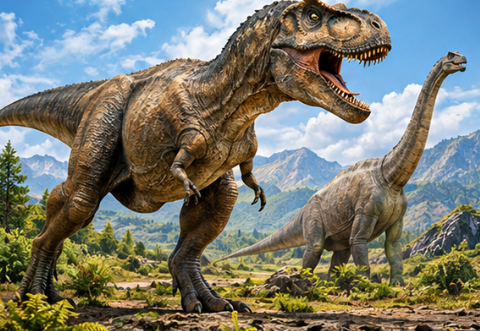
When most people hear the word “reptile,” they think of snakes, lizards, turtles, or crocodiles. Dinosaurs looked very different from many of these animals, and some grew to enormous sizes. Others had feathers, sharp claws, horns, or long necks.
Even so, dinosaurs belong to the reptile family tree.
In fact, there is an even more surprising fact: birds are living dinosaurs. One branch of the dinosaur family survived the mass extinction about 66 million years ago and eventually evolved into the birds we see today.
So, are dinosaurs reptiles? Yes—but understanding why requires a closer look at their evolutionary history.
What Makes an Animal a Reptile?
The word “reptile” is often associated with animals that have scales, lay eggs, and rely on their surroundings to regulate body temperature. However, modern scientists also look at evolutionary relationships when classifying animals.
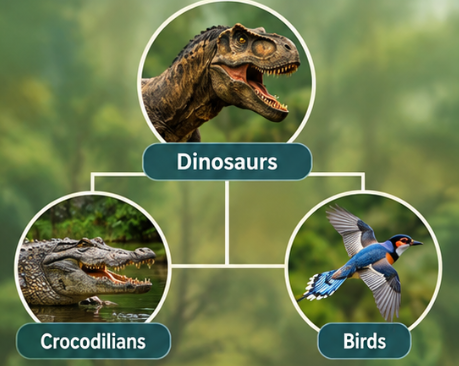
Dinosaurs belonged to the archosaur branch of the reptile family tree. This larger group also includes crocodilians and the evolutionary lineage that eventually produced birds.
This means dinosaurs were not simply giant lizards. They were a highly diverse group of reptiles that evolved their own unique body structures and lifestyles over millions of years.
How Do We Know Dinosaurs Were Reptiles?
Scientists learn about dinosaurs mainly through fossils.
Their fossilized bones reveal several features that distinguish dinosaurs from many other ancient reptiles. One of the most important characteristics was their posture.
Most dinosaurs held their legs underneath their bodies rather than spreading them out to the sides. This upright posture helped support their weight and allowed many dinosaurs to walk and run efficiently.
Dinosaurs also shared important characteristics with other reptiles. They had backbones, laid eggs, and descended from ancient reptilian ancestors.
However, dinosaurs were incredibly diverse. Some had scales, while some groups developed feathers or feather-like coverings.
Were Dinosaurs Cold-Blooded?
For many years, dinosaurs were commonly described as cold-blooded animals, similar to modern reptiles.
Today, scientists have a more complicated understanding of dinosaur biology.
Evidence from fossils suggests that at least some dinosaurs may have had relatively high metabolic rates. Some dinosaurs also had feathers or other body coverings that could have helped them retain heat.
Because dinosaurs included thousands of different species, they probably did not all have exactly the same way of regulating body temperature.
So being a reptile does not necessarily mean that every dinosaur behaved exactly like a modern lizard.
Were Dinosaurs Different From Modern Reptiles?
Yes.
Dinosaurs belonged to the reptile lineage, but they evolved many characteristics that made them very different from modern reptiles.
Their upright posture was one major difference. Their legs were generally positioned beneath their bodies, giving them a more efficient way of supporting and moving their weight.
Some dinosaurs also developed feathers.
Theropod dinosaurs, the group that includes famous animals such as Tyrannosaurus rex and Velociraptor, eventually produced the evolutionary lineage that became modern birds.
This means that some dinosaurs looked surprisingly similar to birds.
Are Birds Dinosaurs?
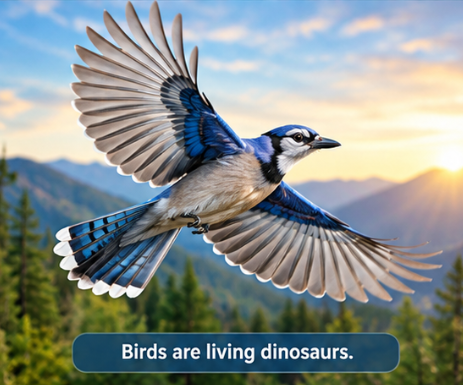
Yes. Birds are living dinosaurs.
Modern birds evolved from small theropod dinosaurs. For this reason, scientists often use the term “avian dinosaurs” when referring to birds.
When scientists talk about the dinosaurs that disappeared around 66 million years ago, they often use the term “non-avian dinosaurs.” These include famous animals such as Tyrannosaurus rex, Triceratops, and Stegosaurus.
Birds survived the mass extinction and continued evolving.
So technically, dinosaurs are still alive today.
A sparrow, eagle, penguin, or chicken may look nothing like a Tyrannosaurus rex, but all birds belong to the surviving dinosaur lineage.
If Birds Are Dinosaurs, Are Birds Reptiles Too?
Under modern evolutionary classification, birds can also be considered reptiles.
This may sound strange because birds look completely different from snakes, turtles, or crocodiles. However, biological classification is based heavily on evolutionary relationships.
Birds descended from dinosaurs, and dinosaurs belong within the broader reptile lineage.
Therefore, birds can be considered both dinosaurs and reptiles in an evolutionary sense.
Were Pterosaurs Dinosaurs?
No.
Pterosaurs were flying reptiles, but they were not dinosaurs.
Animals such as Pterodactylus and Quetzalcoatlus lived during the age of dinosaurs, but they belonged to a separate reptile group.
Their wings were made from a membrane of skin supported by an elongated finger. This was very different from the feathered wings that evolved in birds.
So although pterosaurs and dinosaurs lived during some of the same periods, they were not the same type of animal.
Were Marine Reptiles Dinosaurs?
No.
Several fascinating reptiles lived in the prehistoric oceans, including ichthyosaurs, plesiosaurs, and mosasaurs.
These animals are sometimes mistakenly called “sea dinosaurs,” but they were not dinosaurs.
They belonged to different reptile groups and evolved independently from dinosaurs.
Dinosaurs were primarily land animals, although their surviving descendants—birds—eventually adapted to many different environments.
What About Dimetrodon?
Dimetrodon is another prehistoric animal that is often mistaken for a dinosaur.
It lived long before many of the famous dinosaurs appeared.
Although Dimetrodon had a somewhat dinosaur-like appearance, it was not a dinosaur. It belonged to a different evolutionary group called synapsids.
Synapsids eventually gave rise to mammals.
This is another good example of why not every large prehistoric animal should be called a dinosaur.
Dinosaurs vs. Other Ancient Reptiles
It can be helpful to compare dinosaurs with other prehistoric animals.
Tyrannosaurus rex was a dinosaur and a reptile.
Triceratops was a dinosaur and a reptile.
Stegosaurus was a dinosaur and a reptile.
Velociraptor was a dinosaur and a reptile.
Pterosaurs were reptiles, but they were not dinosaurs.
Mosasaurs were reptiles, but they were not dinosaurs.
Plesiosaurs were reptiles, but they were not dinosaurs.
Ichthyosaurs were reptiles, but they were not dinosaurs.
Modern crocodiles are reptiles, but they are not dinosaurs.
Modern birds are both birds and living members of the dinosaur lineage.
The key idea is that “reptile” is a much larger evolutionary group than “dinosaur.”
Did All Dinosaurs Look Like Reptiles?
Not at all.
Some dinosaurs looked like the classic dinosaur we imagine: large bodies, long tails, powerful jaws, and scaly skin.
Others looked very different.
Some theropod dinosaurs had feathers. Some dinosaurs had horns, plates, armor, or unusually long necks. Some were enormous, while others were no bigger than modern birds.
Dinosaurs lived for more than 160 million years and evolved into an enormous variety of forms.
This incredible diversity is one reason scientists no longer think of dinosaurs as simply “giant lizards.”
They were a unique and highly successful branch of the reptile family tree.
So, Are Dinosaurs Reptiles?
Yes, dinosaurs are reptiles.
They belong to the reptile lineage and were part of the archosaur group of reptiles. Over millions of years, dinosaurs developed unique characteristics that separated them from other reptiles.
They could be enormous or tiny, feathered or scaly, herbivorous or carnivorous.
And their story did not completely end with the extinction that occurred around 66 million years ago.
One branch survived.
That branch became the birds.
Quick Facts About Dinosaurs
Are dinosaurs reptiles?
Yes. Dinosaurs belong to the reptile lineage.
Are all reptiles dinosaurs?
No. Reptiles include many different groups, and dinosaurs are only one branch of that larger family.
Are birds dinosaurs?
Yes. Modern birds are living dinosaurs descended from theropod dinosaurs.
Are birds reptiles?
Yes, when animals are classified according to evolutionary ancestry.
Were pterosaurs dinosaurs?
No. Pterosaurs were a separate group of flying reptiles.
Were plesiosaurs dinosaurs?
No. Plesiosaurs were marine reptiles, not dinosaurs.
Were mosasaurs dinosaurs?
No. Mosasaurs were another group of marine reptiles.
Final Thought
Dinosaurs may seem completely different from the reptiles we see today, but evolution connects them through a much larger family tree.
They were reptiles that evolved into an extraordinary variety of forms. Some became enormous predators, others became giant plant-eaters, and some developed feathers and eventually gave rise to birds.
So the next time you see a bird sitting on a tree or walking across the ground, remember something surprising:
You are looking at a modern-day dinosaur.
The dinosaurs did not completely disappear. One branch of their family survived, evolved, and is still living among us today.