
The Bengal Tiger is one of the world’s most recognizable big cats. With its orange coat, bold black stripes, powerful body, and piercing eyes, this tiger has become an important symbol of wild nature across South Asia. It is also an important predator in the ecosystems where it lives.
Bengal Tigers are found mainly in India and Bangladesh, with populations also occurring in parts of Nepal and Bhutan. They can survive in several different environments, from grasslands and forests to mangrove landscapes. Their ability to move through dense vegetation, swim well, and hunt a variety of prey helps them survive in challenging habitats.
But there is much more to the Bengal Tiger than its appearance. Its behavior, hunting strategy, relationship with its habitat, and role in the food chain make it one of the most fascinating wild animals to study.
What Is a Bengal Tiger?
The Bengal Tiger is the tiger population commonly associated with the Indian subcontinent and is traditionally referred to as Panthera tigris tigris. Tigers belong to the cat family, Felidae, and are members of the genus Panthera.
The name “Bengal Tiger” comes from the Bengal region, although these tigers are not limited to Bangladesh or the Bengal region. Most of the world’s wild Bengal Tigers occur in India, while populations also occur in Bangladesh, Nepal, and Bhutan.
Like other tigers, Bengal Tigers are mammals and carnivores. They have strong jaws, large canine teeth, powerful forelimbs, and sharp claws that help them capture prey.
Their striped coat is also more than a beautiful pattern. The stripes break up the outline of the animal, helping it blend into vegetation and shadows while it approaches prey.
Where Do Bengal Tigers Live?
Bengal Tigers live in a range of habitats across South Asia. Their environment can include tropical forests, deciduous forests, grasslands, wetlands, and mangrove habitats.
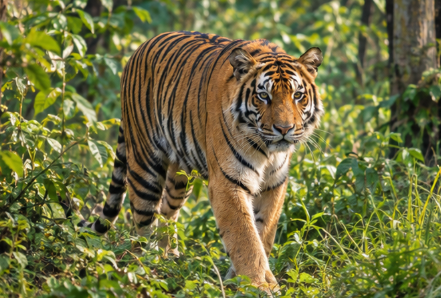
One of the best-known habitats is the Sundarbans, a huge mangrove ecosystem shared by India and Bangladesh. Tigers living in this region have adapted to an environment that is very different from the forests and grasslands found elsewhere.
Habitat quality is especially important because tigers need both suitable cover and enough prey. A tiger cannot maintain a healthy territory if its habitat does not provide sufficient food and safe areas for resting, breeding, and raising cubs.
Historically, tigers occupied a much larger area across Asia. Their range has been dramatically reduced over time because of habitat loss, human development, and the decline of wild prey.
What Does a Bengal Tiger Look Like?
A Bengal Tiger has the classic tiger appearance: an orange or reddish-orange coat covered with dark vertical stripes, a white underside, and a broad head.
Its body is built for power rather than long-distance running. Strong shoulders and forelimbs help the tiger bring down prey, while its claws provide grip.
One interesting feature is that every tiger has its own stripe pattern. The pattern is unique enough that researchers can use photographs of individual tigers to help identify them in the wild, much like people can be distinguished by fingerprints.
Male Bengal Tigers are generally larger and heavier than females. However, size can vary depending on sex, age, habitat, prey availability, and individual genetics.
How Big Is a Bengal Tiger?
The Bengal Tiger is one of the largest living cats.
Adult males are usually substantially larger than females, with body size varying across populations. A tiger’s total length also includes its long tail, which helps with balance and movement.
It is important not to assume that every Bengal Tiger reaches the extreme sizes sometimes shown in wildlife articles or social media posts. Tiger size varies naturally, and exceptionally large individuals should not be treated as typical examples.
The largest tiger subspecies is generally considered the Amur Tiger, while Bengal Tigers are also among the larger tiger populations.
What Do Bengal Tigers Eat?
Bengal Tigers are carnivores and mainly eat other animals.
Their diet can include deer, wild boar, and other medium- to large-sized mammals. Depending on the habitat, prey availability, and opportunity, tigers can also take smaller animals.
A tiger’s hunting success depends heavily on having enough healthy prey in its territory. This is one reason protecting prey species is just as important as protecting the tiger itself.
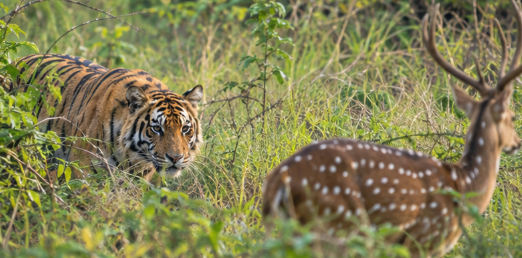
Bengal Tigers are ambush hunters. Instead of chasing prey over long distances, they generally use vegetation, darkness, terrain, and patience to get close before making a powerful attack.
After getting close enough, the tiger uses its strength and teeth to overpower the prey.
How Do Bengal Tigers Hunt?
A Bengal Tiger usually relies on stealth rather than speed over a long distance.
The tiger may move quietly through vegetation while keeping a low profile. Its striped coat can make its body harder to see among grasses, branches, shadows, and vegetation.
Once it gets close enough, it can make a sudden attack. Strong forelimbs help the tiger wrestle with prey, while its teeth and jaws are used to kill and consume the animal.
Tigers often become more active around dusk, during the night, and in the early morning, although their activity can change depending on the habitat and local conditions.
Are Bengal Tigers Good Swimmers?
Yes. Bengal Tigers are strong swimmers.
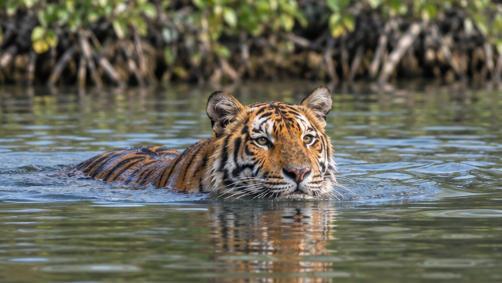
Unlike many domestic cats, tigers are comfortable in water and may cross rivers, swim through wetlands, or enter water to cool themselves. This ability is especially useful in areas containing rivers, lakes, wetlands, and mangrove channels.
The Sundarbans provides an interesting example because its landscape contains numerous waterways. Tigers living there must be comfortable moving through a wet and complicated environment.
Swimming can therefore be more than a way to cool down. In some habitats, it is an important part of simply moving around the tiger’s territory.
Are Bengal Tigers Solitary Animals?
Bengal Tigers are generally solitary.
Adult tigers normally maintain their own territories and use scent markings, scratches, vocalizations, and other signals to communicate with other tigers.
This does not mean that tigers never interact. Mothers spend a great deal of time with their cubs, and males and females may come together for mating.
Young cubs also remain dependent on their mother while they learn essential survival skills, including how to move through the habitat and eventually hunt successfully. Cubs typically stay with their mother for roughly 18 to 24 months before becoming increasingly independent.
Bengal Tiger Cubs
Bengal Tiger cubs are born small and vulnerable.
The mother usually chooses a relatively sheltered location where the cubs can remain protected during their early development. During the first part of their lives, the cubs depend heavily on their mother for food and protection.
As they grow, they begin following their mother and observing how she behaves. Hunting is not simply an instinctive activity; young tigers also need experience to become effective hunters.
The period of independence is particularly important because young tigers face many dangers before they are capable of surviving completely on their own.
Female tigers can produce multiple cubs in a litter, although not all cubs necessarily survive to adulthood. Smithsonian notes that tiger cub survival is especially difficult during the first years of life.
How Long Do Bengal Tigers Live?
Tigers in the wild commonly live around 10 to 15 years, although individual lifespans can vary. Tigers under human care may sometimes live longer.
Life in the wild is difficult. Young tigers face starvation, injuries, disease, competition, and territorial conflicts. Adults can also be injured while competing with other tigers or while hunting large prey.
Because of these risks, reaching old age in the wild is not guaranteed.
Why Are Bengal Tigers Important?
The Bengal Tiger is an apex predator in many of the ecosystems where it occurs. This means it sits near the top of the food chain.
By hunting herbivores and other animals, tigers are part of the natural system that helps regulate prey populations. Protecting a tiger also means protecting the habitat and prey species that support it.
Tiger conservation therefore extends beyond one animal. A healthy tiger landscape generally requires forests or other suitable habitat, adequate prey, functioning ecosystems, and protection from illegal killing.
This makes the Bengal Tiger an important indicator of the health of many South Asian wild landscapes.
What Threatens Bengal Tigers?
Bengal Tigers face several major conservation challenges.
Habitat Loss and Fragmentation
When forests and other natural areas are converted for agriculture, roads, settlements, or other development, tiger habitat can become smaller and more fragmented.
Fragmentation can make it harder for tigers to move between areas and can separate populations.
Loss of Prey
Tigers need enough wild prey to survive. When people hunt the animals that tigers normally eat, the available food supply can decline.
IUCN material identifies prey depletion, habitat loss, hunting, and conflict with people among important threats affecting tigers.
Poaching
Illegal killing and trafficking have historically been major threats to tigers. Tiger body parts have been illegally traded, including for traditional medicine markets.
International commercial trade in tigers and their parts is heavily restricted under CITES.
Human-Tiger Conflict
As human settlements and agricultural areas expand near tiger habitat, encounters between people and tigers can occur.
This can create serious problems for both communities and wildlife. Conservation programs therefore need to protect tigers while also addressing the safety and economic concerns of people living near tiger habitats.
How Are Bengal Tigers Protected?
Tiger conservation involves several approaches.
Protected areas can provide important habitat where hunting and other human pressures are controlled. Rangers can patrol these areas, monitor wildlife, and work to prevent poaching.
Scientists also use camera traps and other methods to monitor tiger populations. Individual stripe patterns can help researchers recognize particular animals.
Protecting prey populations is another important part of tiger conservation. A protected forest is not enough if the animals that tigers depend on have disappeared.
Conservation can also involve local communities. Where people and tigers share landscapes, reducing conflict and improving coexistence can help protect both wildlife and people.
International cooperation is also important because wildlife trafficking can cross national borders.
Bengal Tiger vs Other Tigers
The Bengal Tiger is one population of the tiger species, Panthera tigris. Tigers share many characteristics regardless of where they live, including their striped coats, carnivorous diet, solitary lifestyle, swimming ability, and ambush-hunting strategy.
However, tiger populations can differ in body size, appearance, habitat, and adaptations.
For example, Amur Tigers are associated with colder environments in the Russian Far East and northeastern China, while Bengal Tigers are adapted to the varied environments of South Asia.
These differences show how the same species can adapt to very different ecosystems.
10 Quick Facts About the Bengal Tiger
- The scientific name of the tiger is Panthera tigris.
- Bengal Tigers are associated primarily with South Asia.
- India contains the largest share of the world’s wild tiger population.
- Bengal Tigers are carnivores.
- Their black stripes are individually distinctive.
- Tigers are strong swimmers.
- Adult tigers are generally solitary.
- Tiger cubs depend on their mother while learning survival skills.
- Habitat loss, prey depletion, poaching, and human-wildlife conflict are major conservation concerns.
- Protecting tiger habitat also protects many other species living in the same ecosystem.
Read More: Animal Kingdom: A Simple Guide to the World of Animals
Frequently Asked Questions
Where do Bengal Tigers live?
Bengal Tigers mainly live in South Asia, particularly India and Bangladesh, with populations also occurring in Nepal and Bhutan. Their habitats include forests, grasslands, wetlands, and mangrove ecosystems.
What do Bengal Tigers eat?
Bengal Tigers mainly eat meat. Common prey includes deer and wild boar, although their exact diet depends on the animals available in their habitat.
Are Bengal Tigers endangered?
The tiger species as a whole is classified as Endangered. Conservation status is assessed at the species level by the IUCN, while the Bengal Tiger refers to a geographic population traditionally classified within the tiger species.
How long do Bengal Tigers live?
Wild tigers commonly live around 10 to 15 years, although individual lifespans vary. Tigers under human care can sometimes live longer.
Are Bengal Tigers solitary?
Yes. Adult tigers are generally solitary and territorial. Mothers and cubs form an important exception, remaining together until the young become independent.
Can Bengal Tigers swim?
Yes. Tigers are excellent swimmers and can cross rivers and other bodies of water. Water can also provide opportunities for cooling and movement through wet habitats.
Final Thoughts
The Bengal Tiger is much more than a powerful and beautiful big cat. It is a highly adapted predator that can live in forests, grasslands, wetlands, and even complex mangrove landscapes.
Its survival depends on much more than protecting individual animals. Tigers need large enough habitats, healthy prey populations, safe movement routes, and effective protection from poaching. At the same time, conservation efforts must consider the people who live and work close to tiger habitat.
Understanding the Bengal Tiger helps explain why protecting wildlife is also about protecting entire ecosystems. When forests, prey animals, waterways, and natural landscapes remain healthy, tigers have a better chance of continuing to survive in the wild.