
Have you ever looked at a bird in your backyard and wondered, what do birds eat? Some birds seem to spend their entire day searching through trees, while others pick at seeds on the ground, catch insects in midair, or dive into water for fish.
The simple answer is that birds eat many different kinds of food. Their diets depend on their species, habitat, season, body size, and the type of food available around them.
Birds may eat seeds, fruits, insects, worms, nectar, fish, small animals, nuts, grains, and even carrion. Some birds are specialists that focus on one particular type of food, while others are opportunistic feeders that eat whatever suitable food they can find.
Understanding what birds eat is more than just an interesting nature fact. A bird’s diet tells us a lot about how it survives, where it lives, and even how its beak and body are adapted to its environment.
What Do Birds Eat?
Birds have incredibly diverse diets. There is no single food that every bird eats.
Depending on the species, birds may feed on:
- Seeds
- Fruits and berries
- Nuts
- Insects
- Caterpillars
- Spiders
- Worms
- Nectar
- Fish
- Frogs
- Lizards
- Small mammals
- Other birds
- Carrion
- Grains and plant material
Some birds are mainly plant eaters, while others depend heavily on animals and insects. Many species are omnivores, meaning they can eat both plant and animal foods.
For example, finches often have diets centered around seeds, hummingbirds rely heavily on nectar while also eating tiny insects, and many birds of prey hunt animals for food. Crows are well-known generalist feeders and can eat seeds, fruits, insects, small animals, carrion, and other available foods.
This incredible variety is one reason birds can live successfully in such different environments.
Why Do Different Birds Eat Different Foods?
Birds have evolved different feeding strategies based on their environments and physical features.
One of the biggest clues to a bird’s diet is its beak.
A bird with a short, strong bill may be well adapted for cracking seeds. A bird with a long, narrow bill may be able to reach nectar inside flowers. Raptors such as hawks and eagles have hooked bills that help them tear animal prey.
Insect-eating birds may have different beak shapes that help them capture insects from leaves, bark, water, or the air.
Their feet, wings, tongues, and digestive systems can also be adapted to their feeding habits.
In other words, a bird’s body can almost act like a specialized set of eating tools.
1. Seeds
Seeds are one of the foods people most commonly associate with birds.
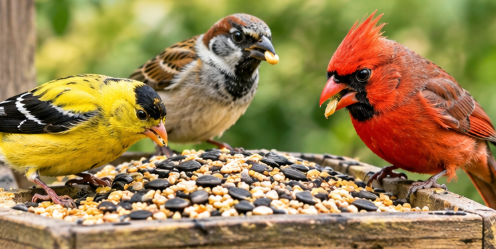
Many birds eat seeds from grasses, flowers, trees, and other plants. Species such as finches, sparrows, and some cardinals can make excellent use of seeds because their bills are well suited to handling and cracking them.
Common seeds eaten by birds include:
- Sunflower seeds
- Millet
- Grass seeds
- Safflower seeds
- Thistle or Nyjer seeds
- Various wild plant seeds
Sunflower seeds are particularly popular among many backyard feeder birds. Audubon’s bird-feeding guidance notes that black-oil sunflower seeds attract a wide range of bird species.
However, seeds are only one part of the bird-food story. A wild bird does not necessarily spend its entire life looking for seed.
2. Fruits and Berries
Many birds love fruit.
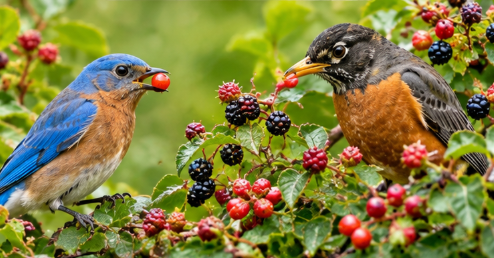
Wild berries can provide birds with energy, particularly during seasons when other food sources become less available. Birds may eat berries from shrubs and trees or feed directly on soft fruits.
Common examples include:
- Berries
- Apples
- Plums
- Peaches
- Grapes
- Figs
- Wild fruits
Fruit-eating birds also play an important role in ecosystems because they can transport and spread seeds from one location to another.
Some birds have diets that change throughout the year. Cornell’s bird-feeding resources note that many songbirds eat more insects during spring and summer and shift toward fruits and seeds during fall and winter.
So if you see a bird enjoying berries one season and seeds another, that can be completely normal.
3. Insects
Insects are an extremely important food source for many birds.
Birds may eat:
- Beetles
- Caterpillars
- Grasshoppers
- Ants
- Flies
- Moths
- Crickets
- Aphids
- Other small insects
Some birds search for insects on leaves and branches. Others catch flying insects from the air. Some dig through soil or leaf litter to find insects and larvae.
Insects can be particularly important during the breeding season because they provide valuable nutrients for growing chicks.
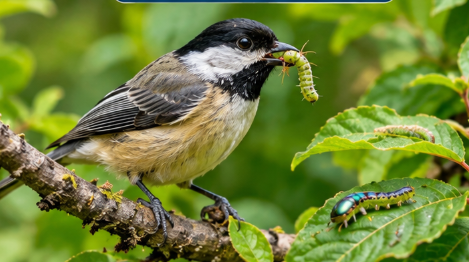
This is one reason a garden filled with native plants can be useful for birds. Native plants can support insect populations while also providing seeds, fruits, nectar, and shelter. Cornell’s recent guidance highlights the connection between native plants and natural bird foods such as caterpillars, berries, and flower nectar.
4. Worms and Other Small Invertebrates
Earthworms and other small invertebrates are another food source for many birds.
Ground-feeding species may search through soil, grass, mud, or leaf litter to find food.
Depending on the bird, its prey may include:
- Earthworms
- Snails
- Slugs
- Spiders
- Larvae
- Small crustaceans
- Other invertebrates
Birds that feed on these animals often have behaviors that help them locate hidden prey.
For example, a bird may tilt its head, probe the soil, move leaves aside, or repeatedly inspect the same patch of ground.
5. Nectar
Some birds feed on nectar from flowers.
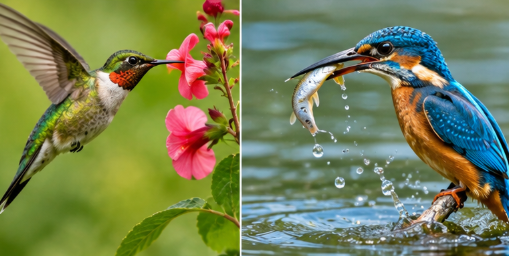
Hummingbirds are the most famous example. Their long bills and specialized tongues allow them to reach nectar deep inside flowers.
Nectar provides birds with energy, but nectar-eating birds may also consume tiny insects and spiders.
Nectar is particularly important for birds that have high energy requirements because hovering and active flight can require substantial amounts of energy.
Flowers therefore provide more than just beautiful scenery. They can be an important natural food source for birds.
6. Fish
Some birds are excellent fish hunters.
Fish-eating birds include species such as:
- Kingfishers
- Ospreys
- Pelicans
- Cormorants
- Some herons
- Some penguins
These birds have different strategies for catching fish.
Some dive from the air, some plunge into water, and others patiently wait before striking.
Their habitats are often closely connected to rivers, lakes, wetlands, oceans, and coastal areas.
7. Small Animals
Some larger birds eat small animals.
Depending on the species, their prey can include:
- Frogs
- Lizards
- Snakes
- Mice
- Rats
- Small mammals
- Small birds
Birds of prey are especially adapted for hunting. Their powerful feet and sharp talons help them capture prey, while hooked bills help them tear food apart.
However, not every bird that eats an animal is a specialized predator. Some omnivorous birds may occasionally eat small animals when the opportunity appears.
8. Carrion
Some birds eat animals that have already died.
Carrion can be an important food source for scavenging birds, especially vultures and some other opportunistic species.
Scavengers perform an important ecological role by helping remove dead animals from the environment.
This is another reminder that birds have many different feeding roles. Not every bird needs to chase live prey to survive.
What Do Baby Birds Eat?
Baby birds do not all eat the same food.
The diet of a baby bird depends on its species.
Many young songbirds are fed by their parents, who bring food back to the nest. In numerous species, insects and other protein-rich foods can be particularly important while chicks are growing.
Parent birds may collect caterpillars, insects, spiders, worms, or other suitable foods and deliver them directly to their young.
Some bird species have different feeding strategies, and young birds may become independent at different ages.
It is therefore important not to assume that a baby bird needs bread, milk, or human food.
If you find a baby bird outside a nest, the safest response depends on whether it is a nestling or a fledgling and whether it is actually injured or orphaned.
What Do Birds Eat in Winter?
Bird diets can change with the seasons.
During winter, some natural food sources become harder to find. Insects may become less active, plants may produce fewer fresh foods, and cold weather can increase a bird’s energy needs.
Depending on the species and location, birds may rely more heavily on:
- Seeds
- Nuts
- Fruits
- Berries
- Stored food
- Available insects
- Other natural foods
Some birds also visit backyard feeders.
Cornell’s bird-feeding information explains that seasonal changes can influence bird diets, with many songbirds relying more on insects during warmer months and shifting toward fruits and seeds at other times.
What Do Wild Birds Eat?
Wild birds generally eat foods that are naturally available in their habitats.
A forest bird may eat insects, berries, seeds, and tree-dwelling prey. A wetland bird may feed on fish, insects, aquatic animals, or plants. A grassland bird may search for seeds and insects.
This means there is no universal “wild bird diet.”
Instead, birds have adapted to take advantage of the food resources available in their particular environments.
Audubon notes that most wild birds rely primarily on natural foods, even though some species also visit feeders for supplemental foods such as seeds, suet, fruit, and nectar.
What Do Birds Eat at Bird Feeders?
Bird feeders can attract different birds depending on the type of food being offered.
Common feeder foods include:
| Bird Food | Birds That May Be Attracted |
|---|---|
| Sunflower seeds | Finches, cardinals, chickadees and others |
| Nyjer seeds | Finches |
| Peanuts | Jays, woodpeckers and other species |
| Suet | Woodpeckers, nuthatches, chickadees |
| Fruit | Fruit-eating birds |
| Mealworms | Insect-eating birds |
| Nectar | Hummingbirds and some other nectar feeders |
The exact birds you see will depend on your location and the species living nearby.
Cornell and Audubon both emphasize offering appropriate foods and maintaining clean feeding areas.
What Should You Avoid Feeding Birds?
Not every food that humans eat is appropriate for birds.
It is generally better to provide birds with suitable natural foods or appropriate bird foods rather than random leftovers.
For example, Cornell’s bird-feeding guidance specifically lists certain leftovers and bacon drippings among foods that should not be offered.
You should also avoid feeding birds spoiled, moldy, or contaminated food.
Cleanliness matters too. Bird feeders can bring multiple birds into close contact, so dirty feeding areas may increase disease risks. Regular cleaning and sensible feeder placement are important parts of responsible bird feeding.
Do All Birds Eat Seeds?
No.
This is one of the most common misconceptions about birds.
Seeds are an important food for many species, but plenty of birds eat other foods.
For example:
- Hummingbirds feed heavily on nectar.
- Swallows catch insects.
- Kingfishers catch fish.
- Hawks hunt animals.
- Vultures feed on carrion.
- Orioles may eat insects and fruit.
- Crows have broad, flexible diets.
Some birds even change their diets depending on the season.
So if someone asks, “Do birds eat seeds?” the answer is yes—but not all birds depend on seeds.
How a Bird’s Beak Helps It Eat
A bird’s beak is one of the most fascinating clues to its feeding behavior.
Different shapes perform different jobs.
Strong, Short Bills
These are useful for cracking and processing seeds.
Long, Thin Bills
These can help birds reach nectar or probe into flowers and other places.
Hooked Bills
Birds of prey use hooked bills to tear meat.
Wide Bills
Some birds have broad bills that help them capture insects or process different types of food.
Specialized Bills
Some species have highly specialized bills adapted to their particular food sources.
This variety shows how closely bird anatomy is connected to diet.
How Do Birds Find Their Food?
Birds use different senses and behaviors to locate food.
They may:
- Search leaves and branches
- Probe soil
- Dig through leaf litter
- Watch for movement
- Catch insects while flying
- Dive into water
- Search flowers for nectar
- Break open seeds
- Follow other birds
- Scavenge for available food
Some birds are patient hunters. Others constantly move around while searching.
A bird’s feeding behavior can be just as interesting as the food itself.
Does Bird Diet Change With the Seasons?
Yes, and seasonal changes can be significant.
During spring and summer, insects may become abundant and provide valuable food for many birds and their growing young.
In autumn, fruits, berries, and seeds may become more available.
During winter, some birds may depend more heavily on seeds, nuts, berries, and stored food sources.
Migration also changes the picture. A bird may eat different foods at different points along its migration route depending on what is available.
This flexibility helps birds survive changing environmental conditions.
Why Bird Diets Matter to Ecosystems
Birds are not just consumers in an ecosystem. They also affect the environment around them.
For example, insect-eating birds can consume large numbers of insects. Fruit-eating birds can help spread seeds. Nectar-feeding birds can contribute to pollination.
Scavenging birds help consume carrion.
Because of these roles, bird diets are closely connected to healthy ecosystems.
A bird searching for berries, catching an insect, or carrying a seed may be doing much more than simply having lunch.
How to Help Birds Find Natural Food
If you want to make your yard more bird-friendly, food is only one part of the picture.
Consider planting native plants that can provide:
- Seeds
- Berries
- Nectar
- Insects
- Natural cover
- Nesting opportunities
Fresh water can also be valuable for drinking and bathing.
Audubon recommends thinking about food, water, and shelter together when creating a bird-friendly space.
Planting native plants for birds can provide natural sources of seeds, berries, insects, and other foods.
Frequently Asked Questions
What do birds eat most?
It depends on the species. Birds may eat seeds, insects, fruits, nectar, fish, small animals, nuts, grains, or other foods. There is no single diet shared by all birds.
Do birds eat bread?
Bread is not an ideal staple food for wild birds. It is better to provide species-appropriate foods and natural food sources rather than relying on human leftovers.
What do baby birds eat?
Baby birds usually receive food brought by their parents, and the type of food varies by species. Many young songbirds receive insects and other nutritious foods while growing.
Do birds eat insects?
Yes. Many bird species eat insects, including beetles, caterpillars, flies, grasshoppers, and other small invertebrates.
Do birds eat fruit?
Yes. Many birds eat berries and other fruits. Fruit can be especially important for some species during certain seasons.
Do all birds eat seeds?
No. Some birds primarily eat insects, nectar, fish, meat, fruit, or other foods. Many species are omnivores and eat several types of food.
What do birds eat in the wild?
Wild birds eat whatever suitable natural foods their species has adapted to use. Depending on the bird and habitat, this can include insects, seeds, fruits, nectar, fish, small animals, nuts, and carrion.
What is the best food for birds?
There is no single best food for every bird. The appropriate food depends on the species. Providing natural habitat with native plants can offer birds a variety of natural food sources.
Final Thoughts
So, what do birds eat?
The answer is much more interesting than simply saying “seeds.”
Birds eat an enormous variety of foods, including seeds, fruits, insects, worms, nectar, fish, small animals, nuts, and carrion. Their diets are shaped by their species, habitat, body structure, season, and the food available around them.
A tiny hummingbird searching for nectar and a powerful eagle hunting prey may seem completely different, but both are perfectly adapted to find and use the food available in their environments.
The next time you see a bird hopping across your yard, sitting in a tree, or flying over a pond, take a closer look. It might be searching for an insect, looking for seeds, watching for a fish, or simply checking whether lunch is hiding nearby.
Birds have been finding creative ways to get food for millions of years—and their diets are one of the best ways to understand just how wonderfully diverse the bird world really is.