
Birds can live anywhere from just a few years to several decades, depending on the species. So, if you are wondering how long do birds live, there is no single number that applies to every bird. A small songbird may have an average lifespan of only a few years in the wild, while some parrots, seabirds, cranes, and other large birds can live for decades.
Lifespan also depends on whether a bird lives in the wild or under human care. Wild birds face predators, food shortages, disease, extreme weather, and other environmental risks. Birds in human care may live longer because they receive regular food, veterinary care, shelter, and protection from many natural dangers.
Understanding bird lifespan is useful because it shows how different bird species have adapted to their environments.
How Long Do Birds Live on Average?
Many small wild birds have relatively short average lifespans, often only a few years. However, individual birds that survive their early years can sometimes live considerably longer.
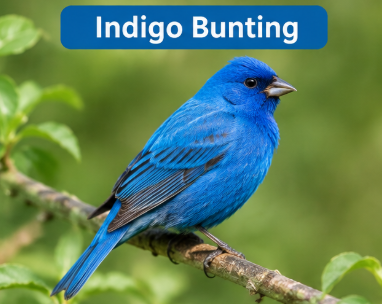
For example, the Smithsonian’s National Zoo reports an average lifespan of about two to three years for the indigo bunting, although some individuals can live up to 10 years. Northern mockingbirds live about eight years on average in the wild, with some individuals living up to 20 years in human care.
Larger birds and certain groups of seabirds can have much longer lifespans. Audubon notes that some albatrosses and shearwaters can live for many decades, while birds such as hummingbirds generally have much shorter lifespans.
This means the best way to answer the question is to look at individual species rather than treating all birds as having the same life expectancy.
Bird Lifespans by Type
Here are some examples showing how widely bird lifespans can vary:
| Bird | Typical or reported lifespan |
|---|---|
| Indigo bunting | About 2–3 years average; some reach 10 years |
| Northern mockingbird | About 8 years average in the wild; up to 20 years in human care |
| American avocet | About 9–15 years in the wild |
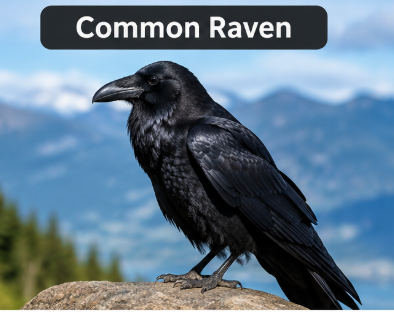
| Raven | About 10–15 years in the wild; potentially 40–50 years in human care |
| Scarlet macaw | Around 33 years on average in the wild; up to 75 years in captivity |
| Some albatrosses | Several decades |
These figures should not be treated as a universal life expectancy for every individual bird. Lifespan estimates can also differ depending on the method used to measure them.
Why Do Some Birds Live Much Longer Than Others?
Bird lifespan is influenced by several biological and environmental factors.
Body Size
In general, larger birds tend to live longer than smaller birds. This is a broad pattern rather than an absolute rule.
Audubon notes that lifespan in birds often relates to body size, with larger birds generally living longer. However, some groups—including seabirds such as albatrosses, shearwaters, and petrels—are exceptionally long-lived for their size.
Predators
Predation can have a major effect on survival, particularly for small birds and young birds. A bird may have the biological potential to live for many years but never reach that age because of predators.
Birds that are able to fly efficiently can often escape predators and travel to find food or shelter, which may contribute to their ability to survive.
Food and Habitat
Reliable access to food, water, nesting locations, and suitable habitat can affect survival.
Environmental changes can also create additional challenges. Birds may have to move when their habitat becomes unsuitable, and changes in food availability can affect their ability to survive and reproduce.
Disease and Injury
Wild birds can be affected by infectious diseases, parasites, injuries, and other health problems. Even an otherwise healthy bird may have a shorter life if it suffers a serious injury or cannot find sufficient food.
Human Care
Some birds live considerably longer under human care than they typically do in the wild. Protection from predators, consistent nutrition, controlled environments, and access to veterinary treatment can all reduce some of the risks faced by wild birds.
However, the difference varies substantially by species, so it is better to use species-specific information rather than assuming every captive bird will live longer.
Do Small Birds Live Shorter Lives?
Generally, yes, but there are important exceptions.
Small birds such as many songbirds often have relatively short average lifespans in the wild. The Smithsonian, for example, reports that ovenbirds can live up to 11 years, but most live only one to three years in the wild.
Small birds face many challenges, including predators, harsh weather, migration, food shortages, and competition for habitat.
At the same time, size alone does not determine lifespan. Some relatively small seabirds can live surprisingly long lives. This is one reason scientists study bird longevity to understand how flight, metabolism, behavior, and other biological adaptations may influence aging.
How Long Do Birds Live in the Wild?
Wild bird lifespan varies greatly.
For some species, the average lifespan may be only a few years. Other birds can survive for 10, 20, 30, or even more years.
For example, the Smithsonian reports that American avocets can live approximately 9–15 years in the wild.
Ravens are another example of a long-lived bird group. The Smithsonian reports that ravens can live between 10 and 15 years in the wild, while birds in human care may potentially reach 40 or 50 years.
These examples demonstrate why a species-specific lifespan is much more meaningful than a single average for all birds.
How Long Can Birds Live in Captivity?
Some birds can live substantially longer in captivity or other forms of human care.
Birds kept under professional care may receive regular nutrition, protection from predators, veterinary attention, and controlled environmental conditions. These factors can allow some individuals to survive much longer than the typical lifespan recorded in the wild.
Parrots are particularly well known for longevity. Audubon reports that scarlet macaws can live to around 75 years in captivity, while their average lifespan in the wild is reported at about 33 years.
However, a long potential lifespan also means that keeping a long-lived bird as a companion animal can be a major long-term responsibility.
What Is the Oldest Bird?
Some birds have reached extraordinary ages.
One of the best-known examples is Wisdom, a Laysan albatross that Audubon reported as being at least 70 years old. She became famous because of her exceptional longevity and continued survival in the wild.
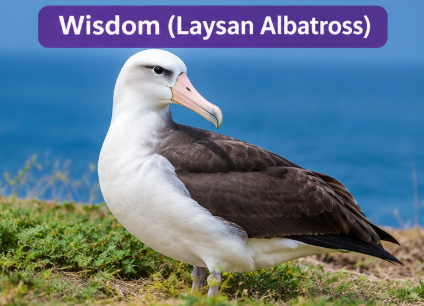
Long-lived seabirds are especially interesting to researchers because they can survive for decades despite spending much of their lives flying long distances over the ocean.
These exceptional individuals should not be confused with the normal lifespan of their species. A record-setting bird represents an extreme example rather than the typical experience of every member of the species.
Why Is It Difficult to Know a Wild Bird’s Age?
It can be difficult to determine the exact age of a wild bird.
Unlike humans, birds generally do not have an obvious visual feature that tells us their precise age. Older birds may sometimes show physical or reproductive changes, but these signs do not provide an exact age in most cases.
Scientists can learn much more when an individual bird is identified, banded, or otherwise monitored over time. Long-term bird research helps scientists document survival and longevity records.
The Cornell Lab of Ornithology maintains extensive bird information and provides life-history information for hundreds of species through its bird guide.
Why Do Birds Age?
Birds do age, even though aging may not always be obvious from their appearance.
Research discussed by Audubon indicates that birds experience biological aging, including changes in reproduction and other aspects of physiology. Scientists are also interested in how birds manage the physiological demands of flight and high metabolism while maintaining relatively long lifespans compared with mammals of similar size.
Bird longevity is therefore an important area of biological research. Studying birds that live unusually long lives may help scientists understand aging and the biological mechanisms that influence it.
So, How Long Do Birds Live?
The short answer is: birds can live from only a few years to several decades, depending on the species and circumstances.
Small songbirds may have average wild lifespans of only a few years, while some larger birds and seabirds can live for decades. Certain parrots can also live for many decades under human care.
The most important factors include species, body size, habitat, food availability, predators, disease, environmental conditions, and whether the bird lives in the wild or under human care.
Rather than asking for one lifespan that applies to every bird, it is more accurate to ask how long a particular species typically lives. That approach gives a much clearer picture of the remarkable diversity of bird life.
Frequently Asked Questions
How long do most birds live?
There is no single lifespan for most birds. Many small wild birds have average lifespans of only a few years, while some larger birds and seabirds can live for decades.
Which bird lives the longest?
Some albatrosses are among the longest-lived wild birds. Wisdom, a Laysan albatross, has been documented at an age of at least 70 years, according to Audubon.
Do birds live longer in captivity?
Some species can live longer under human care because they may receive consistent food, veterinary treatment, shelter, and protection from predators. The difference depends on the species.
How long do small birds live?
Many small wild birds have relatively short average lifespans, often only a few years. However, some individuals survive much longer than the average.
Can a bird live for 20 years?
Yes. Some bird species can reach 20 years or more. For example, the Smithsonian reports that northern mockingbirds can live up to 20 years in human care.
Why do some birds live so long?
Bird longevity is influenced by species biology, body size, flight ability, lifestyle, environment, and other adaptations. Scientists continue to study why some birds age more slowly and live much longer than expected for their size.