
Flightless birds are birds that have lost the ability to fly but have developed other ways to move, find food, escape danger, and survive in their environments. Some are incredibly fast runners, while others are powerful swimmers. The ostrich, emu, kiwi, cassowary, rhea, and penguins are some of the best-known examples.
At first, it may seem strange that a bird could survive without flying. After all, wings and flight are two of the features we usually associate with birds. But birds have evolved in many different ways, and flying is not always necessary for survival.
When there is plenty of food on the ground, few natural predators are present, or swimming and running are more useful than flying, the ability to fly can become less important. Over many generations, some birds evolved bodies better suited for life on land or in water.
What Are Flightless Birds?
Flightless birds are birds that cannot fly through the air. Their wings may still be present, but they are usually too small, too modified, or otherwise unsuitable for powered flight.
Not all flightless birds look alike. An ostrich has long legs and a large body built for running, while a kiwi is small, round, and adapted for searching through forest floors. Penguins are different again because their wings have become strong flippers that help them swim.
Flightlessness has evolved more than once in birds. This means that all flightless birds do not necessarily come from one single flightless ancestor. Different species developed similar traits as they adapted to different environments.
Why Can’t Flightless Birds Fly?
There is no single reason why a particular bird cannot fly. Their bodies have changed over time in ways that make flying difficult or impossible.
One important change is body size. Large birds require more energy to become airborne and stay in the air. The ostrich, for example, has a massive body and long, powerful legs. Its body is much better suited to running than flying.
The wings can also become smaller or change shape. In penguins, the wings have become specialized flippers. They are extremely useful underwater but cannot produce normal flight.
Flightless birds may also have changes in their breast muscles, bones, feathers, and overall body proportions. Instead of spending energy maintaining a body designed for flight, natural selection can favor traits that help with running, swimming, feeding, or surviving on the ground.
How Did Flightlessness Evolve?
Flightlessness is an example of how evolution can shape animals according to the environments in which they live.
Imagine an island where a bird has plenty of food on the ground and very few predators. A bird that spends less energy maintaining powerful flight muscles may be able to invest more energy in reproduction, growth, or finding food.
Over many generations, birds in such populations can become less dependent on flight. Their wings may become smaller, their bodies heavier, and their legs stronger.
This process did not happen in exactly the same way for every species. Penguins followed a very different evolutionary path from ostriches, even though both are unable to fly.
Scientists therefore consider flightlessness a case of similar adaptations appearing in different bird lineages.
Examples of Flightless Birds
There are several well-known flightless birds living today. They occupy different habitats and have very different lifestyles.
Ostrich
The ostrich is the largest living bird and one of the most recognizable flightless birds in the world.
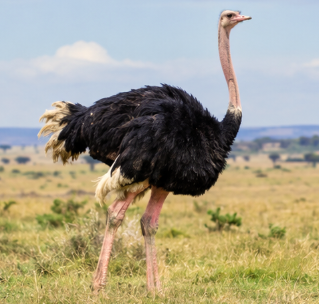
It has extremely long legs, a large body, and powerful muscles designed for running. An ostrich cannot fly, but it can move rapidly across open ground and use its long legs to cover considerable distances.
Ostriches are native to Africa and are commonly associated with savannas, grasslands, and other open environments.
Their size is one reason flight is impractical. Instead of taking to the air, they rely heavily on speed, sharp eyesight, and powerful legs to deal with threats.
Emu
The emu is a large flightless bird native to Australia.
It has long legs, a tall body, and a long neck. Like the ostrich, the emu is a strong runner and is well adapted to life on land.
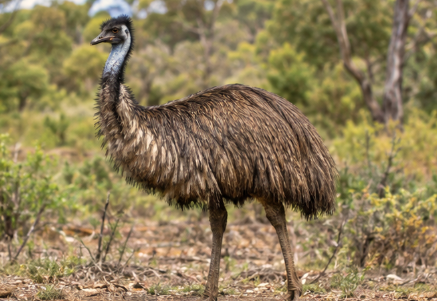
Emus eat a varied diet that can include plants, fruits, seeds, and other available foods. Their ability to travel across large areas helps them find food in Australia’s changing environments.
Cassowary
Cassowaries are large flightless birds found mainly in tropical forests of Australia and New Guinea.
They are known for their striking appearance, including a tall casque on the head, colorful skin around the neck, and powerful legs.
Unlike ostriches and emus, cassowaries are strongly associated with dense forest habitats. They are important seed dispersers because they eat fruits and can carry seeds considerable distances.
Rhea
Rheas are large flightless birds native to South America.
They resemble ostriches in some ways, but they belong to a different group. Rheas have long legs and are adapted for running across open landscapes.
There are different species of rhea, including the greater rhea and Darwin’s rhea. Their diet can include plants, seeds, fruits, and small animals.
Kiwi
The kiwi is one of the most unusual flightless birds.
Native to New Zealand, kiwis are much smaller than ostriches, emus, and rheas. They have a rounded body, short wings, strong legs, and a long bill.
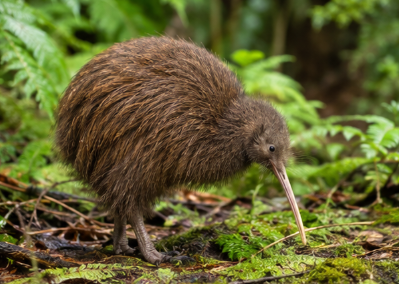
One especially interesting feature is the position of their nostrils near the end of the bill. This helps kiwis locate food while probing through soil and leaf litter.
Kiwis are mostly active at night and spend much of their time searching for insects, worms, and other food on the forest floor.
Penguins
Penguins are perhaps the best-known flightless birds that have become highly specialized for swimming.
Their wings have evolved into flipper-like structures. Instead of using them to fly through the air, penguins use them to move efficiently through water.
Their streamlined bodies, dense feathers, and other adaptations help them survive in marine environments. Different penguin species live in different parts of the Southern Hemisphere, from cold Antarctic regions to much milder coastal areas.
Penguins show that losing flight does not necessarily mean becoming a poor mover. They have exchanged aerial flight for an impressive ability to move underwater.
Are All Large Birds Flightless?
No. Being large does not automatically make a bird flightless.
Some large birds can fly, although they may have different flying styles compared with smaller birds. Body size is only one factor affecting flight.
Similarly, not every flightless bird is huge. The kiwi is a good example of a relatively small bird that has lost the ability to fly.
What matters is the combination of body structure, wings, muscles, weight, behavior, and evolutionary history.
How Do Flightless Birds Survive Without Flying?
Flightless birds use other abilities to survive.
Running
Some species are excellent runners. Ostriches and emus use their long legs to travel quickly and cover large distances.
Running can also help them escape predators or move between feeding areas.
Swimming
Penguins have taken a completely different approach. Their wings are specialized for underwater movement, allowing them to chase fish and other marine prey.
Strong Legs and Feet
Powerful legs can be useful for more than running. Cassowaries, for example, have strong feet that can help them defend themselves when threatened.
Camouflage and Behavior
Some flightless birds rely on staying hidden rather than escaping through the air. Forest-dwelling species may use vegetation, darkness, or their knowledge of their habitat to avoid danger.
Large Body Size
In some species, a large body can make an adult bird difficult for certain predators to attack. Size can also be useful for traveling long distances and finding food.
Where Do Flightless Birds Live?
Flightless birds occur in a variety of habitats.
Ostriches live in parts of Africa, particularly open landscapes. Emus are native to Australia, while rheas live in South America. Cassowaries inhabit tropical forest environments in Australia and New Guinea.
Kiwis are native to New Zealand and are strongly associated with forest and other ground-level habitats.
Penguins are different because they depend heavily on marine environments. Although many people imagine all penguins living on ice, penguin species occupy a wide range of climates.
This variety is one of the most interesting things about flightless birds. Losing flight has not restricted them to one particular type of habitat.
What Do Flightless Birds Eat?
Their diets vary considerably between species.
Ostriches eat plants, seeds, fruits, and other available foods, while emus consume a mixture of plant material, fruits, seeds, and other food sources.
Cassowaries are particularly important fruit eaters and can play a role in spreading seeds through forests. Kiwis search through soil and leaf litter for insects, worms, and other small organisms.
Penguins have a very different diet because they hunt in water. Their food commonly includes fish, squid, krill, and other marine animals, depending on the species and location.
So there is no single “flightless bird diet.” Their food choices are closely connected to their habitats and lifestyles.
Flightless Birds vs. Flying Birds
The biggest difference is obviously the ability to fly, but there are many physical differences behind it.
Flying birds generally need body structures that support powered flight, including suitable wings, flight muscles, feathers, and relatively lightweight body designs.
Flightless birds have evolved in different directions. Some have strong running legs, some have bodies adapted for swimming, and others have physical traits suited to searching for food on the ground.
This is why it is better to think of flightlessness as an adaptation rather than simply a missing ability.
Are Flightless Birds Endangered?
Some flightless birds face serious conservation challenges, although their situations vary greatly by species.
Island-dwelling flightless birds can be particularly vulnerable because they may have evolved in environments with relatively few land predators. When humans introduce new predators or alter habitats, these birds can have difficulty adapting quickly.
Habitat loss, introduced predators, hunting, climate-related changes, and other human activities can affect different species in different ways.
Conservation programs therefore need to consider the specific needs of each bird and its habitat.
Interesting Facts About Flightless Birds
- The ostrich is the largest living bird.
- Emus are native to Australia.
- Rheas are native to South America.
- Cassowaries live in tropical forest environments.
- Kiwis are native to New Zealand and are mostly active at night.
- Penguins use their wings as flippers rather than for aerial flight.
- Flightlessness has evolved independently in different groups of birds.
- Not all flightless birds are large.
- Some flightless birds are excellent runners, while others are highly specialized swimmers.
- Several flightless birds are important parts of their ecosystems.
Why Flightless Birds Are Important
Flightless birds show just how flexible bird evolution can be.
When we think of birds, we often picture animals flying overhead. Flightless species remind us that birds can succeed in completely different ways. Some run across grasslands, some move through forests, and others spend much of their lives swimming beneath the surface.
They are also important to their ecosystems. Fruit-eating species can spread seeds, predators and prey are connected through food webs, and many species contribute to the overall biodiversity of their habitats.
Understanding these birds also helps us understand evolution. Their bodies provide clear examples of how animals can change when different abilities become more useful in particular environments.
Frequently Asked Questions About Flightless Birds
What are flightless birds?
Flightless birds are birds that cannot fly. They have evolved physical and behavioral adaptations that allow them to survive without aerial flight.
What is the most famous flightless bird?
The ostrich is one of the most famous flightless birds and is also the largest living bird. Penguins, emus, kiwis, cassowaries, and rheas are other well-known examples.
Why did some birds lose the ability to fly?
Different species became flightless for different evolutionary reasons. In some environments, running, swimming, feeding on the ground, or conserving energy could become more useful than maintaining the ability to fly.
Can flightless birds swim?
Yes. Penguins are an excellent example. Their wings have evolved into flippers that allow them to swim efficiently.
Are flightless birds still considered birds?
Yes. Flightless birds are birds. They have the characteristics and evolutionary relationships that place them within the bird group even though they cannot fly.
Are all flightless birds related?
No. Flightlessness has evolved independently in different bird lineages. Ostriches, penguins, kiwis, emus, and other flightless birds do not all belong to one single flightless group.
Final Thoughts
Flightless birds are a fascinating reminder that evolution does not follow one fixed design. A bird does not have to fly to be successful.
Ostriches became powerful runners, penguins became exceptional swimmers, and kiwis developed a very different ground-based lifestyle. Each species has its own combination of physical features and behaviors that help it survive.
From African grasslands to Australian forests, South American plains, New Zealand forests, and the world’s oceans, flightless birds have found their own ways to thrive.