
Pet birds can be wonderful companions, but keeping a bird is more than providing a cage, food, and water. Birds are intelligent, active animals with species-specific nutritional, social, behavioral, and environmental needs. Some enjoy interacting closely with people, while others are happier observing their surroundings and singing or calling from their enclosure.
If you are thinking about keeping pet birds, the most important step is choosing a species that fits your lifestyle and then learning how to provide the right environment, diet, exercise, enrichment, and veterinary care.
This guide explains the most common types of pet birds, what they need to stay healthy, and the important things to consider before bringing a bird home.
What Are Pet Birds?
Pet birds are domesticated or captive-bred birds kept by people primarily for companionship and enjoyment. They range from small species such as budgerigars and finches to larger parrots such as cockatoos and macaws.
Different species have very different personalities and care requirements. For example, some birds are naturally more comfortable being handled, while others prefer limited physical contact. Merck Veterinary Manual notes that canaries and finches generally do not enjoy being held, whereas larger parrots can require substantial daily interaction with people.
This means there is no single care routine that works for every bird.
A good pet bird owner should consider the bird’s:
- Species and adult size
- Diet
- Social needs
- Noise level
- Exercise requirements
- Cage and housing needs
- Lifespan
- Personality
- Veterinary requirements
- Need for daily interaction and enrichment
Common Types of Pet Birds
There are many species kept as companion birds, but some are especially familiar to bird owners.
Budgerigars
Budgerigars, often called budgies, are small parrots known for their active personalities, colorful plumage, and ability to learn sounds and behaviors.
They are relatively small compared with larger parrots, but they still need adequate space, exercise, social interaction, enrichment, and a suitable diet.
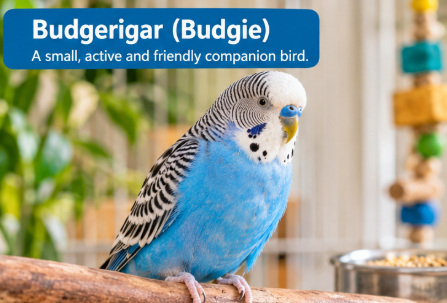
Budgies can be a good choice for people interested in a small companion bird, but their small size should not be mistaken for having minimal care requirements.
Cockatiels
Cockatiels are medium-small parrots recognized by their crest and long tail. They are social, expressive birds and are often kept as companion animals.
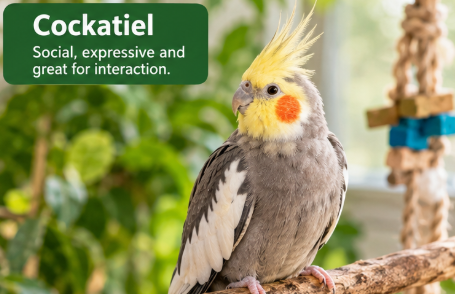
They can form strong relationships with their owners and may learn whistles and other sounds. Like other parrots, cockatiels need appropriate housing, exercise, enrichment, and balanced nutrition.
Lovebirds
Lovebirds are small parrots with lively personalities. They are social birds and can be very active.
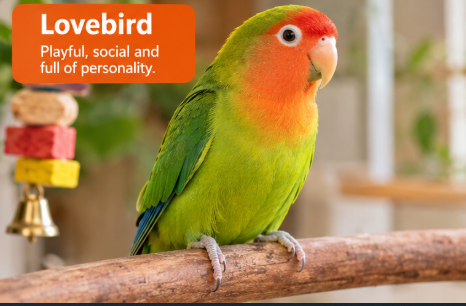
Their name can sometimes create the impression that they automatically need another bird, but compatibility depends on individual birds and circumstances. Birds introduced to one another may not always get along, so housing decisions should be made carefully.
Canaries
Canaries are popular for their songs and attractive colors. They are generally less focused on physical interaction with humans than many parrots.
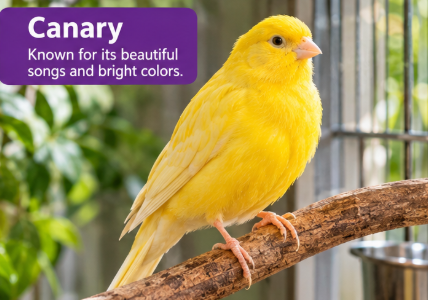
For someone who mainly wants to enjoy a bird’s appearance and vocalizations rather than regularly handling a pet, a canary may offer a different type of companion-bird experience.
Finches
Finches are small, active birds that can be fascinating to watch. Many finches are more comfortable being observed than handled.
They need appropriate space, perches, feeding arrangements, and opportunities for natural movement and social behavior.
Larger Parrots
Larger parrots include species such as African greys, Amazon parrots, cockatoos, macaws, and conures.
These birds can be highly intelligent and socially demanding. Their size also means that their cages, toys, food requirements, noise, and potential lifespan need serious consideration before adoption.
A large parrot should not be chosen simply because it can talk or looks impressive. The owner’s available time, experience, home environment, and ability to provide long-term care are much more important.
How Do You Choose the Right Pet Bird?
The right pet bird is not necessarily the smallest, quietest, most colorful, or most intelligent species. The best match depends on whether you can realistically meet that particular bird’s needs.
Before choosing a bird, ask yourself:
- How much time can I spend with a bird each day?
- Can I provide enough space for exercise?
- Am I prepared for noise and vocalization?
- Can I afford proper food, equipment, and veterinary care?
- Do I want a bird that enjoys handling or one that I mainly observe?
- Can I provide enrichment and social interaction?
- Am I prepared for a long-term commitment?
Different birds have different personalities and requirements, so researching the species before buying or adopting is essential.
What Do Pet Birds Eat?
A healthy diet is one of the most important parts of bird care.
Many companion birds have historically been fed diets dominated by seeds. However, veterinary guidance warns that seed-heavy diets can be nutritionally unbalanced because birds may selectively eat the higher-fat foods they prefer.
Commercially formulated pellets or crumbles are available for many pet birds and are designed to provide a more balanced nutritional foundation. Fresh vegetables and appropriate fruits can also be included according to the bird’s species and veterinary recommendations.
The exact diet should depend on the species.
Fresh food should also be handled carefully because it can spoil if left in the cage for too long. Food and water containers should be cleaned regularly.
Read More: What Do Birds Eat? A Complete Guide to Bird Diets
Foods to Avoid
Some foods and substances can be dangerous for birds. Veterinary references identify foods such as chocolate, caffeinated drinks, alcohol, avocado, onions, and some other human foods as unsafe.
When in doubt, don’t assume that a food is safe simply because humans or other pets can eat it. Check with an avian veterinarian.
What Kind of Cage Do Pet Birds Need?
A bird’s cage is not simply a place to keep it. It should provide enough space for movement, climbing, stretching, playing, and resting.
Merck Veterinary Manual recommends a cage large enough for the bird to move naturally and accommodate multiple perches, toys, and enrichment opportunities. Small cages can restrict movement and contribute to stress and behavioral problems.
Whenever possible, choose the largest safe cage that fits your home and the bird’s needs.
Perches and Cage Equipment
A well-equipped bird enclosure can include:
- Perches of appropriate sizes and textures
- Safe chewable toys
- Foraging toys
- Food and water dishes
- Swings or climbing opportunities
- Areas for resting
- Toys that encourage natural behaviors
Avoid overcrowding the cage. Birds should still have enough open space to move and stretch their wings.
RSPCA guidance also recommends providing different natural wooden perches and arranging them so birds can move around the enclosure.
Do Pet Birds Need Exercise?
Yes. Birds are adapted for movement and flight, and regular activity is important for their physical and behavioral wellbeing.
Depending on the species and home setup, exercise can include climbing, flying, playing, foraging, and moving between perches.
If a bird is allowed to fly outside its cage, the room should first be made safe. Windows and doors should be secured, ceiling fans should be turned off, and dangerous areas such as kitchens should be avoided. RSPCA guidance specifically emphasizes creating a safe indoor flying environment.
Never assume that a bird can safely explore a home without supervision.
Why Is Enrichment Important for Pet Birds?
Birds need more than food and physical space. They also need opportunities to behave naturally.
Wild birds spend significant amounts of time searching for food, moving around, interacting socially, and exploring their surroundings. A captive bird that receives food from one bowl and has nothing else to do may become bored.
Enrichment can include:
- Foraging toys
- Safe chew toys
- Natural branches
- Climbing opportunities
- Training sessions
- Supervised exploration
- Rotating toys
- Food hidden in appropriate enrichment toys
- Interaction with people
Boredom and inadequate stimulation can contribute to unwanted behaviors such as excessive vocalization, biting, or feather plucking.
The goal is not to fill the cage with as many toys as possible. The goal is to give the bird meaningful opportunities to move, explore, forage, and interact.
Do Pet Birds Need Social Interaction?
Many pet birds are highly social. Parrots in particular can become strongly attached to their human caregivers.
A bird that receives little interaction or stimulation may become lonely or develop behavioral problems. However, social needs differ among species and individuals.
Some birds enjoy frequent interaction and training, while others prefer to remain more independent.
Before choosing a bird, it is also useful to understand how long birds live and the long-term commitment involved.
How Often Should a Pet Bird See a Veterinarian?
Birds can hide signs of illness, which means subtle changes in behavior can be important.
Changes in appetite, activity, vocalization, posture, droppings, or sleeping patterns may indicate that something is wrong. Merck Veterinary Manual recommends routine veterinary care and emphasizes the importance of recognizing illness early because delays can reduce the chances of successful treatment.
Ideally, establish a relationship with a veterinarian who has experience with birds.
Do not wait for a serious emergency before learning where appropriate veterinary care is available.
Common Household Dangers for Birds
Bird-proofing your home is an important part of responsible bird ownership.
Potential hazards can include:
- Open windows and doors
- Ceiling fans
- Hot cooking surfaces
- Kitchen fumes
- Toxic foods
- Unsafe household chemicals
- Certain metals
- Other household pets
- Unsupervised access to dangerous areas
Merck Veterinary Manual specifically warns about household hazards and heavy-metal exposure and recommends preventing birds from coming into contact with potentially toxic materials.
The kitchen deserves particular attention because smoke, fumes, and cooking hazards can be dangerous to birds.
Are Pet Birds Easy to Care For?
Pet birds can be rewarding, but they should not automatically be considered low-maintenance pets.
Even a small bird needs appropriate food, clean water, suitable housing, exercise, enrichment, social interaction, and veterinary care.
Larger parrots can require substantially more space, attention, enrichment, and long-term commitment.
The key is to choose a species whose needs you can consistently meet rather than choosing a bird based only on appearance.
What Makes a Good Home for a Pet Bird?
A good home provides more than a cage. It gives the bird a safe environment where it can perform natural behaviors.
A responsible setup generally includes:
- A suitably sized enclosure
- Species-appropriate nutrition
- Clean drinking water
- Multiple suitable perches
- Safe toys and enrichment
- Regular opportunities for exercise
- Appropriate social interaction
- Good hygiene
- Protection from household hazards
- Access to appropriate veterinary care
The exact requirements vary considerably between species, so general bird-care advice should always be adapted to the individual bird.
Final Thoughts on Pet Birds
Pet birds can be fascinating and rewarding companions, but responsible ownership begins with understanding that birds have complex physical and behavioral needs.
Budgies, cockatiels, lovebirds, canaries, finches, and larger parrots all offer different experiences. A bird that is perfect for one household may be completely unsuitable for another.
Before bringing a bird home, research its adult size, diet, temperament, social requirements, housing, exercise needs, expected veterinary care, and long-term commitment.
Most importantly, remember that a bird is a living animal rather than a decorative pet. Providing enough space, nutritious food, enrichment, social interaction, and proper veterinary care gives a companion bird a much better opportunity to remain healthy and thrive.
Frequently Asked Questions
What are the most common pet birds?
Common companion birds include budgerigars, cockatiels, lovebirds, canaries, finches, and various species of parrots. Their care requirements and personalities differ considerably.
Are pet birds good for beginners?
Some smaller species can be suitable for people who are new to bird ownership, but every bird still requires proper housing, nutrition, exercise, enrichment, and veterinary care. Research the species before choosing one.
Can pet birds eat only seeds?
A seed-only diet is generally not considered nutritionally ideal for many companion birds. Formulated diets are available for many species, with appropriate fresh foods added according to the bird’s needs.
Do pet birds need toys?
Yes. Appropriate toys and foraging activities can provide mental stimulation and encourage natural behaviors. Toys should be safe, suitable for the species, and replaced or rotated when necessary.
Do pet birds need time outside their cage?
Many birds benefit from supervised exercise outside their cage, provided the environment is bird-safe. Windows, doors, fans, kitchens, and other hazards should be addressed before allowing free flight.
How can I tell if my pet bird is sick?
Watch for changes in appetite, activity, vocalization, posture, droppings, sleeping, or normal behavior. Birds can hide illness, so unusual changes should be taken seriously and discussed with an avian veterinarian.